Face Shape Hub
Face shape is just a convenient label for how your proportions read in photos — length, width, jaw line. This hub shows how to use it as a starting point for styling and photo framing, not as a ranking of 'good' faces.
Face shape is a starting point, not a ranking
A face-shape label — round, square, oval, heart, oblong, diamond — is just shorthand for the outline your length, width, cheekbones, and jaw create together. It is not a tool for deciding whose face is "better." It is a quick map that tells you where to start with hair, glasses, and makeup placement.
The same face can read very differently depending on where the hairline is cut, which frame is in front of it, and what camera angle captured it. So we treat face shape as the start of a styling experiment, not a fixed diagnosis. After a few rounds of experiments most people find an outline they prefer to lead with.
Three traps to avoid when measuring your face shape
First, do not decide from a single selfie. Wide-angle phone lenses stretch the face longer, while a near-portrait focal length makes it look shorter and rounder. A straight mirror view, a 30° side, and a top-down look at the head shape together give a more honest label.
Second, the all-hair-down measurement often diverges from how people actually see you. Compare against a tied-up or pulled-back style you wear in real life as well.
Third, do not force your face into one clean category. Most faces sit between two shapes. The hair, glasses, and makeup advice in this hub is meant to be blended across two adjacent guides, not picked from a single drawer.
What gets easier once you know your face shape
Picking a haircut, choosing glasses frames, lining up a selfie — none of these has to start from a blank page anymore. With a face-shape label in hand you can ask a stylist a much sharper question, and you can narrow eyewear options down to five or six frames before you walk into a store.
The articles in this hub are meant to make those decisions faster. FaceOracle layers a photo-mood read and first-impression keywords on top — entertainment-only references, not a verdict or a grade.
Combinations you can copy straight at the mirror
Let's start with the round shape. Take a side-part layered cut (a deep side parting that trims volume off the sides and adds length up top) and pair it with rectangular metal-frame glasses. The vertical lines come forward, and the look turns crisp without losing its softness. Lay on a light coral lip, add a warm metal accent like gold, throw on a single V-neck knit, and your eye gets pulled down and lengthened so the whole thing settles together. It loves soft natural light angled from roughly 45 degrees above the front. Reach for this one when you want to look sharp but still at ease.
With the square shape, the whole idea is to surround the straight lines with curves. A C-curl down-perm that turns gently inward near the jawline, plus round cellulose-frame glasses, wraps that angular jaw and shifts it toward something more relaxed. Skip the sharply carved cheekbones and jaw corners in your makeup; a cream blush dabbed in a circle at the center of the cheeks does the softening instead. For the top, a round neck in a warm neutral such as beige or ivory lets the garment's curve rhyme with the hair and the frames. Hard direct sun digs out shadows, so go for diffused light, like a window on an overcast day, which rounds the corners off and keeps the mood calm and gentle.
An oblong face is worth breaking up horizontally, just once. Try a medium wave with side bangs (a fringe that sweeps to the side) and a wide, thick horn-rimmed frame; the long vertical flow gets interrupted partway down and the proportions calm right down. On the lips, fill the center with an MLBB (my-lips-but-better) tone rather than a sharp red to push width outward, and widen the shoulder line with a boat neck or horizontal stripes for better balance. The fun part is how much the tone alone changes things. A cool metal like silver with a cool-tone outfit reads tidy and fresh, while gold and warm tones tip the same face toward warm and easygoing.
None of this is an answer key, just a place to start. Copy a combination, then use a mirror and a selfie to pick whichever version you like best on yourself. From there, nudge the hair length or the frame thickness one notch at a time until it's genuinely yours. It's all a styling reference meant for fun, so please only try it on your own photos or on photos of someone who has said yes.
Frequently asked questions
What if I am between two face shapes? Most people are. Blend the two nearest guides in roughly equal parts. Between round and oval, for example, lead with the round tips that add length and borrow the oval freedom on top.
Is a face shape fixed for life? The underlying bone structure barely changes, but the impression of cheeks and jawline shifts with weight, puffiness, and age. So treat a face shape as the read in this photo, not a permanent label.
Can I change the impression without surgery? Yes. Hairline length, side volume, frame shape, and contour placement alone can noticeably change the outline. The articles in this hub walk through how, step by step.
Articles in this hub
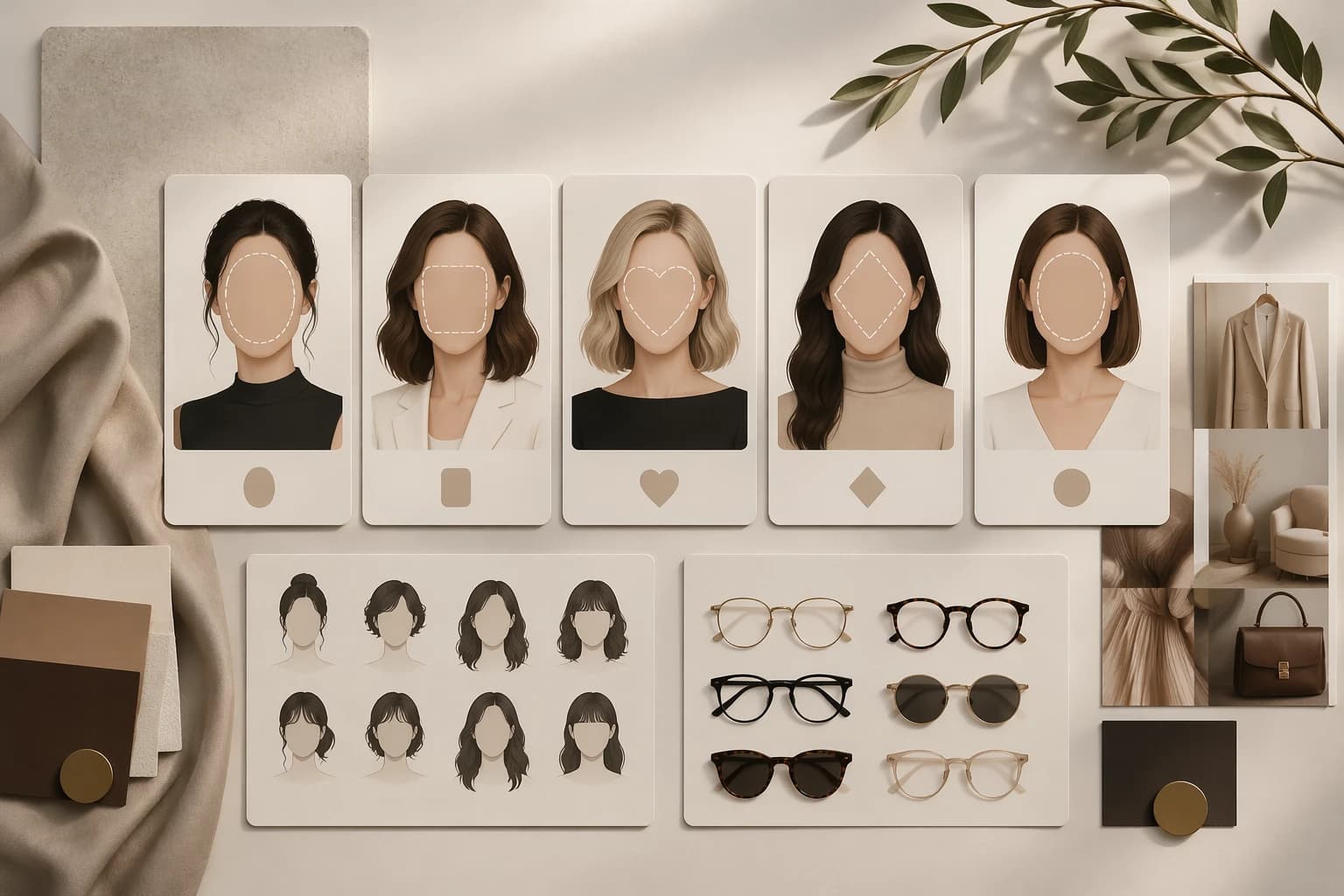
Face Shape Basics for Styling and Framing
Use face shape as a starting point for styling and photo framing — not as a ranking system.
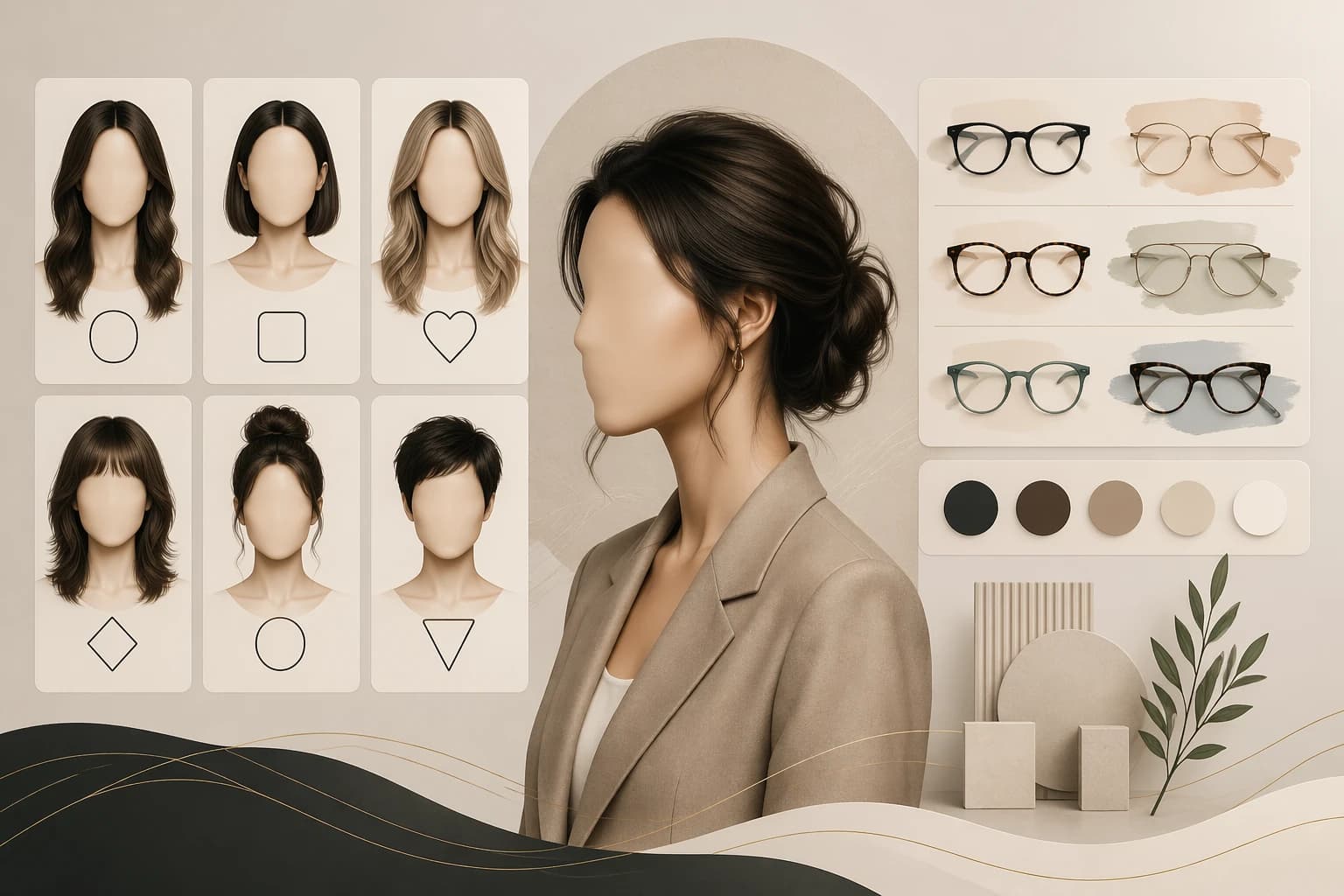
Hairstyles by Face Shape: Beginner Guide
Hair is the fastest lever for reshaping a face outline. Starting points for six face shapes, with the reasoning behind each.
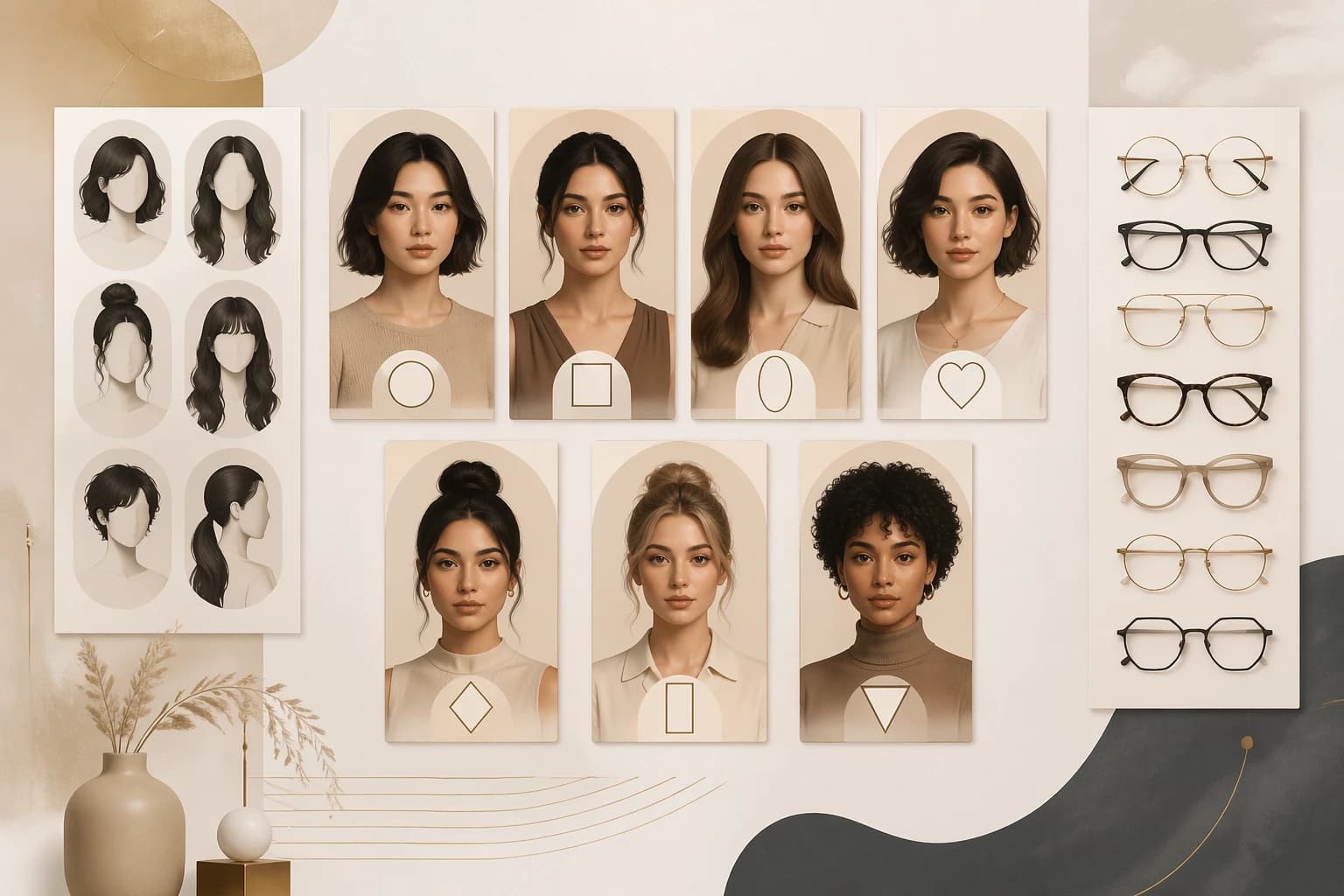
Face Shape Style Impressions — Round, Square, Oval & Heart
A for-fun overview of 7 face shapes, their visual impressions, and what traditional face reading says. Not a basis for judging personality or ability.
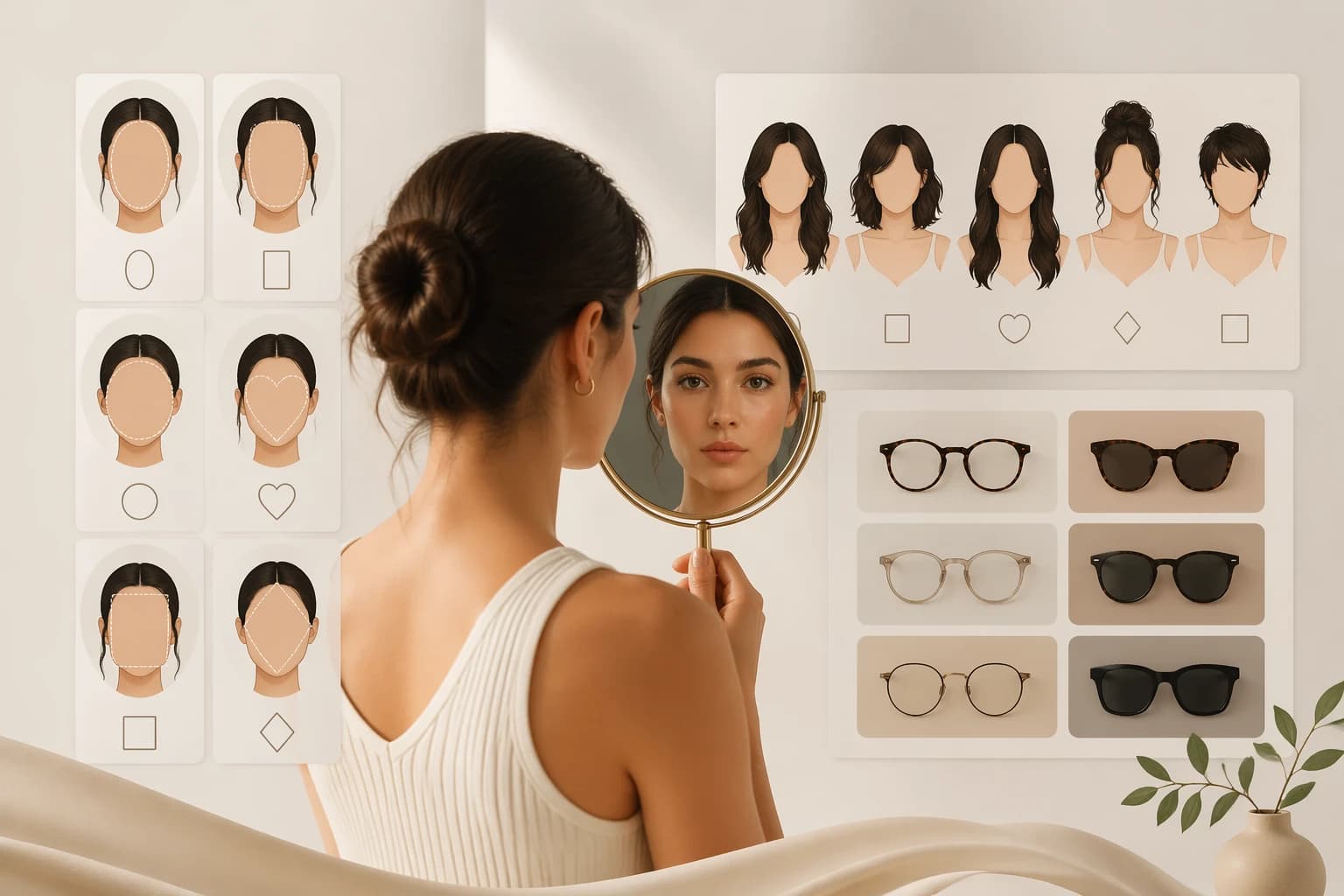
How to Find Your Face Shape — A Mirror Is All You Need
Self-measure your face shape with just a mirror, plus hairstyle tips for each type.
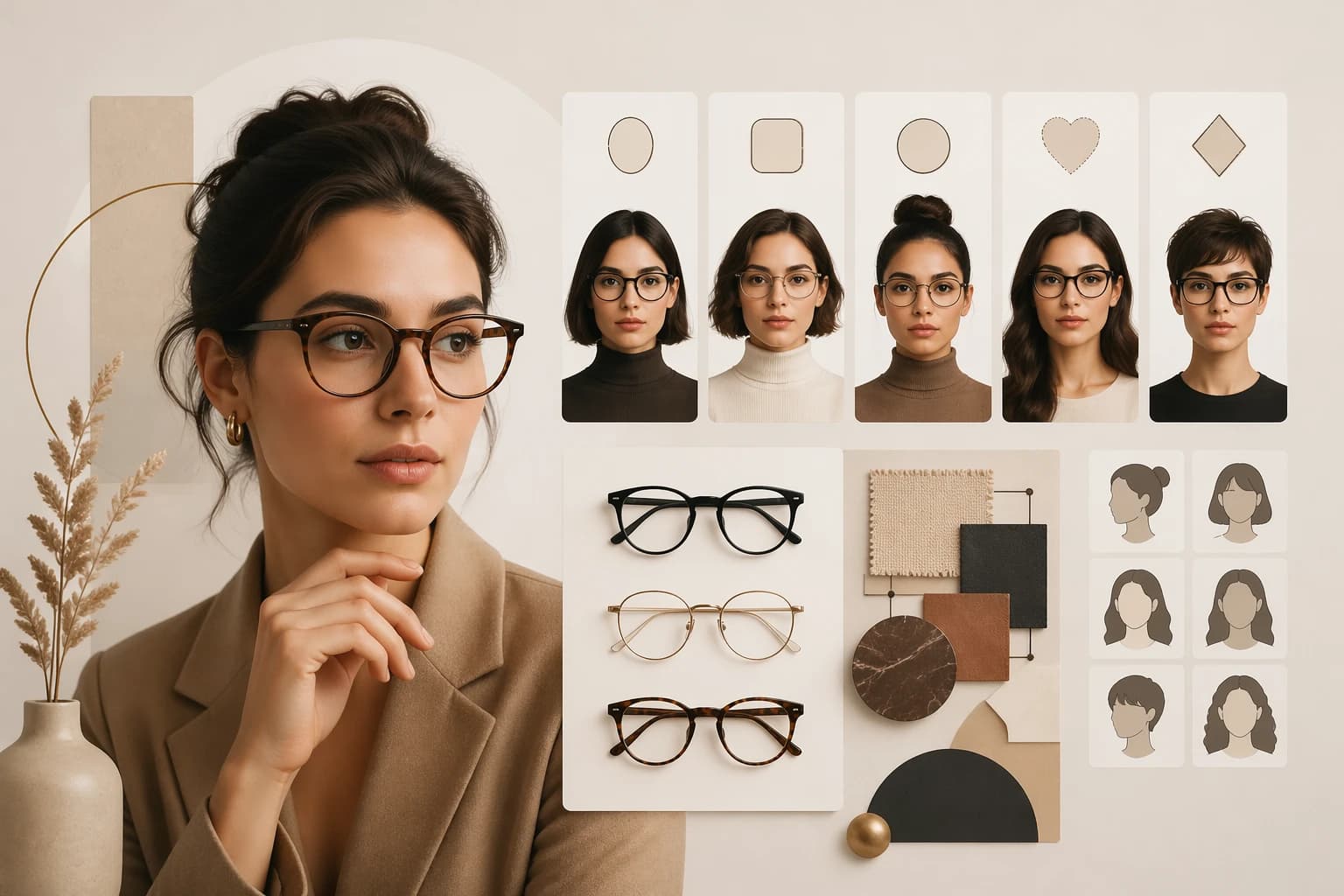
Accessories by Face Shape — 6 Shapes × 5 Items (Glasses, Hats, Earrings, Sunglasses)
One consolidated guide matching glasses, hats, earrings, necklines, and sunglasses to 6 face shapes, plus frame colors by personal color — explained through two visual principles.
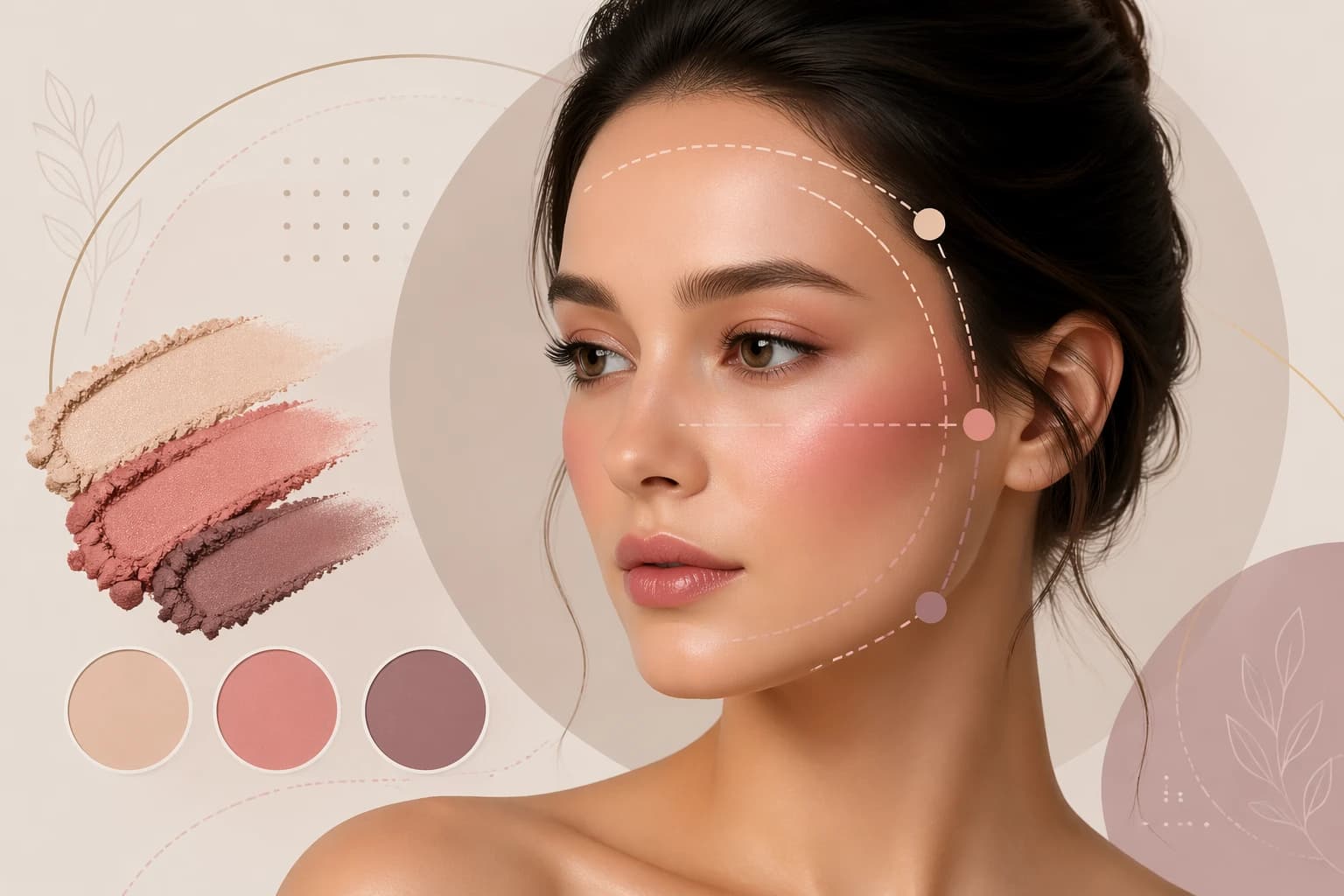
Makeup Placement and Face Balance Basics
Makeup is really a redistribution of light and shadow. A practical guide using a three-zone model and blush placement.
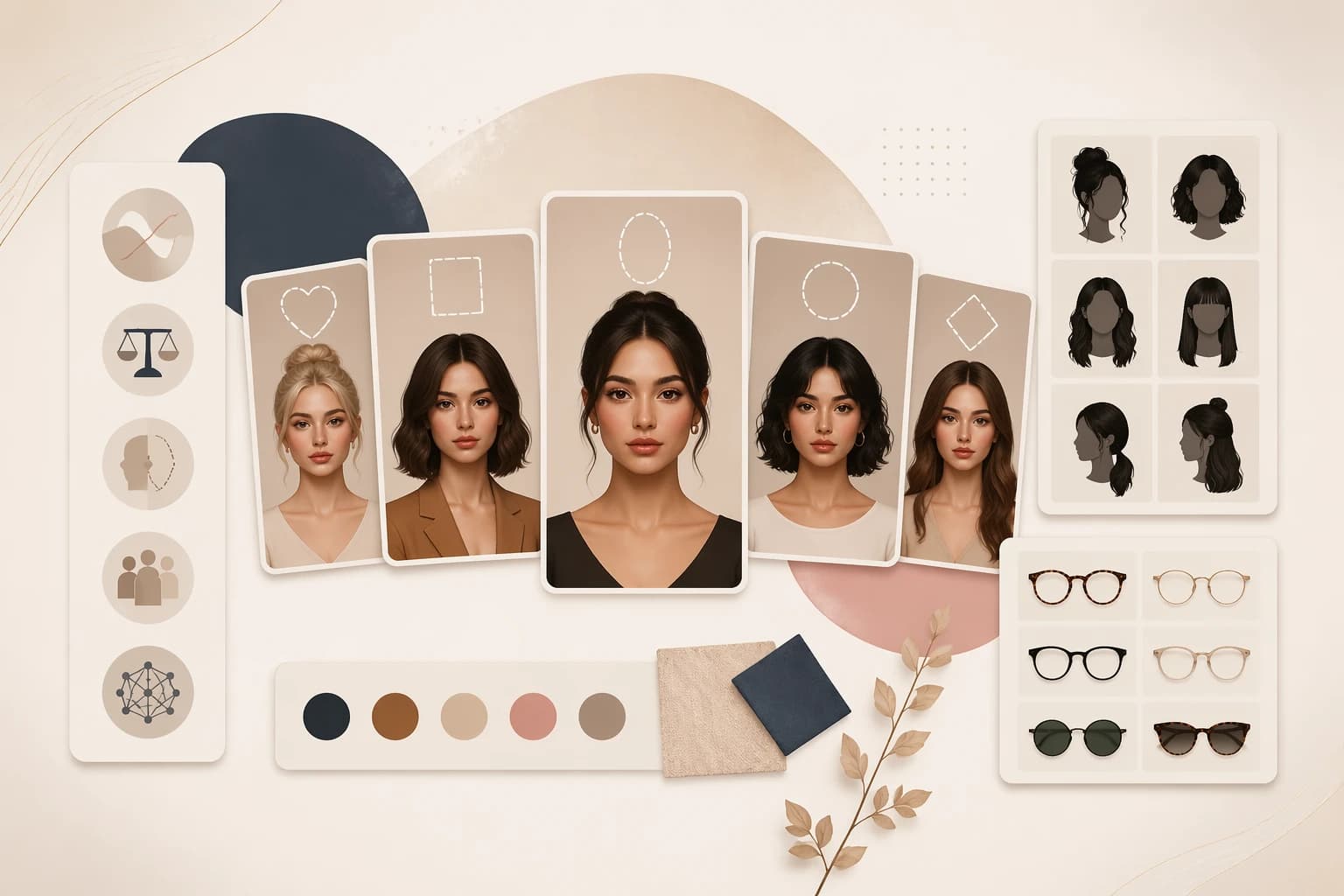
Common Myths About Face Shape and Attractiveness
Five recurring myths — "oval is the prettiest," "AI can score attractiveness" — and why each oversimplifies reality.
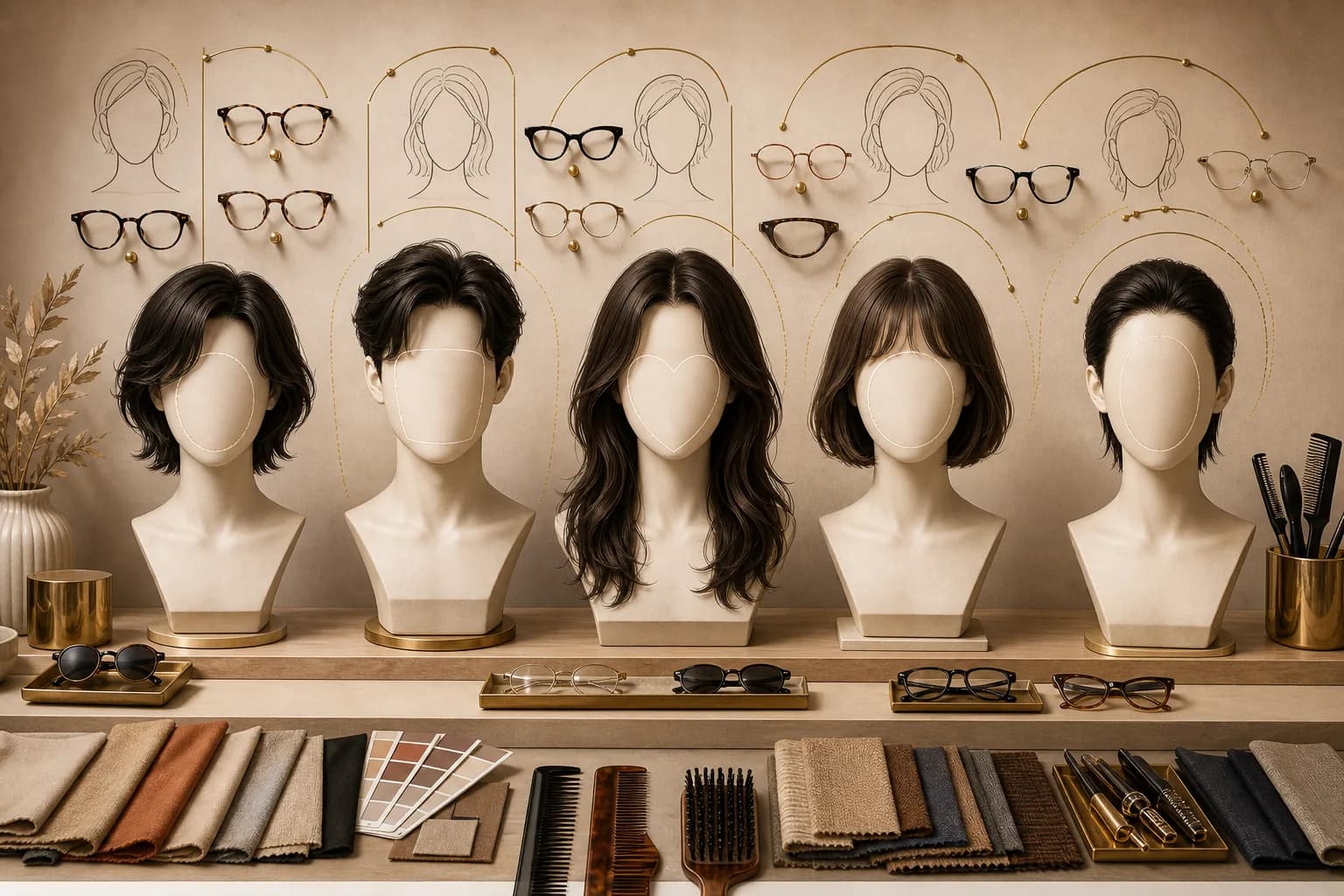
Matching Hair and Glasses to Your Face Shape — A Combined Chart
Stop picking hair and glasses separately. This fun styling guide pairs them by face shape — round, square, long, heart, oval — with a single combined chart and combos to skip.
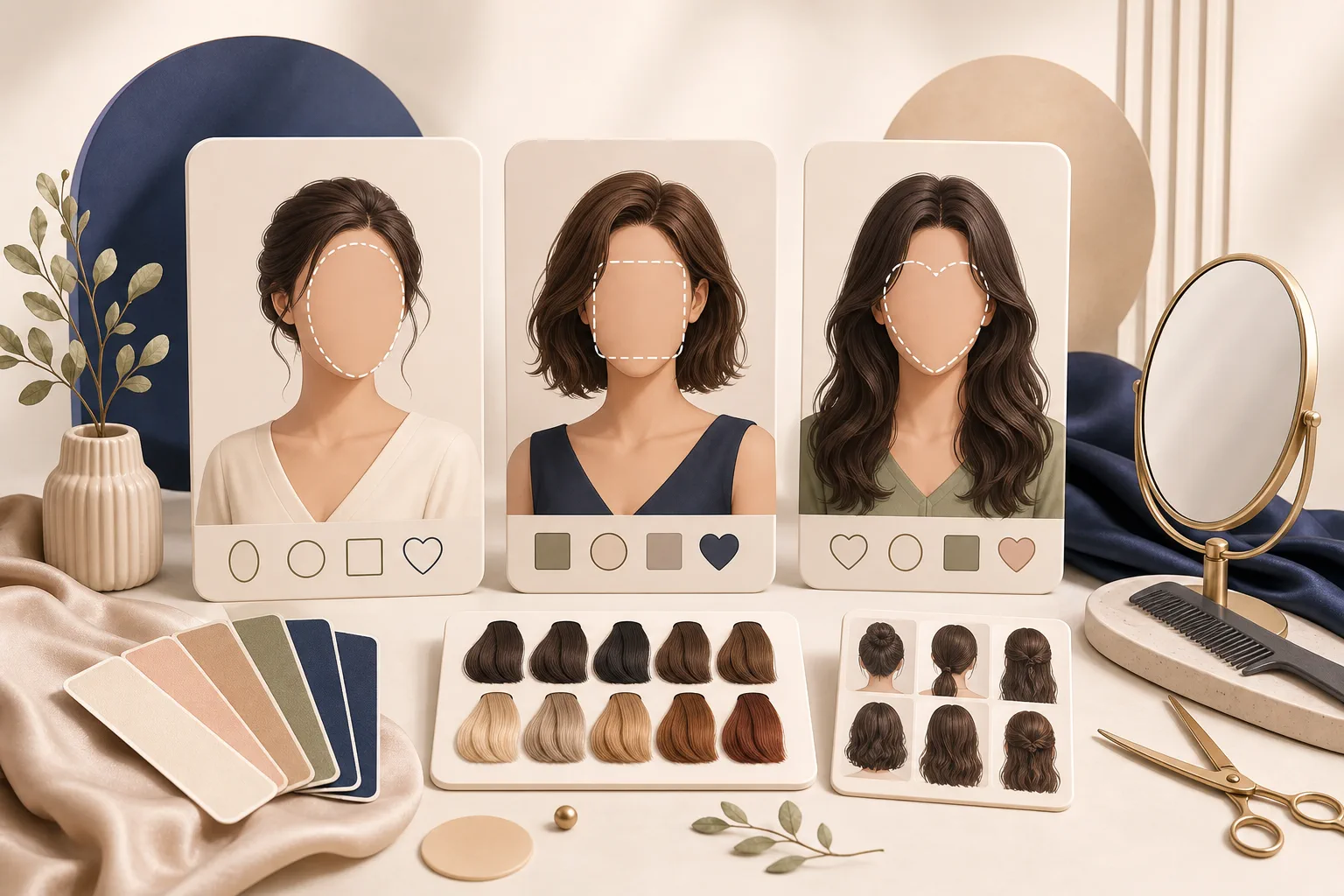
Styling and Photo Angles That Make a Face Look Smaller — How the Illusion Works
A gentle guide to how hair, necklines, accessories, hats, and camera angles create the optical illusion of a smaller, more balanced face. Nothing actually shrinks — it's just styling that shifts where the eye lingers.
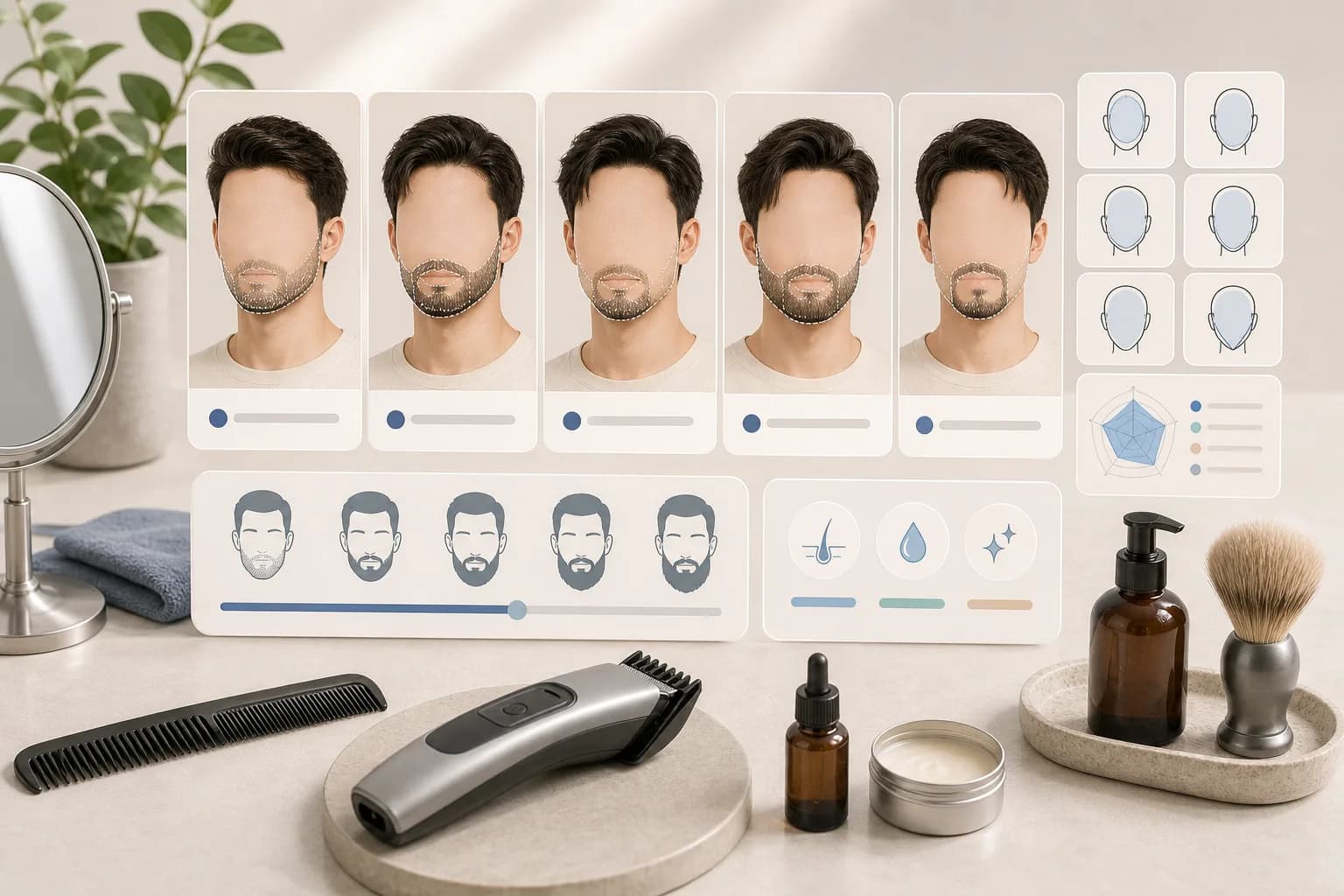
Men's Hairstyles by Face Shape — From Round to Inverted Triangle
A styling reference for men by face shape (round, long, square, oval, inverted triangle): cuts that balance vertical and horizontal, fade height, parting, length on top, and beard pairing. Includes exact barber phrasing, matte clay vs pomade basics, and how a cut reads in photos — all just for fun.
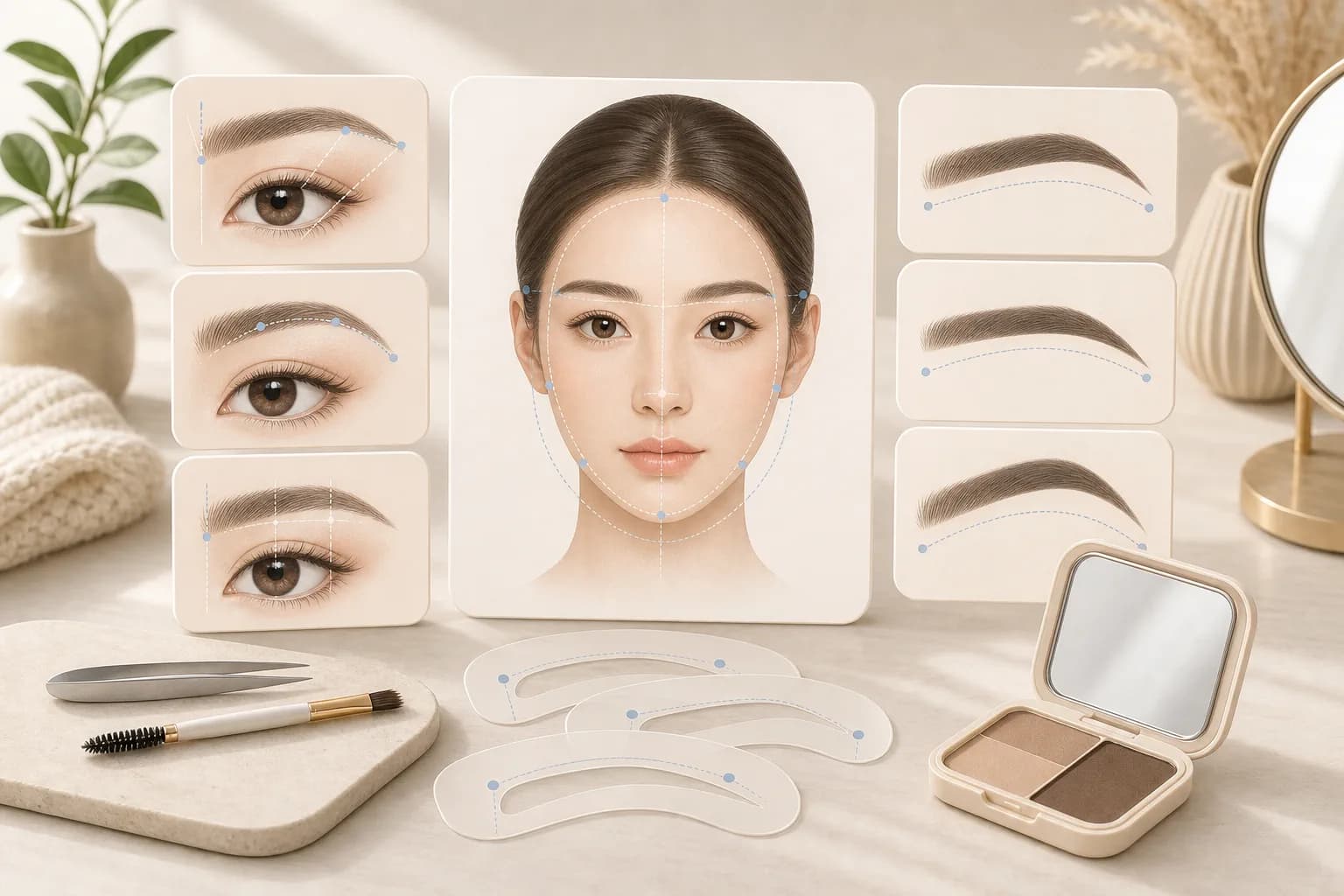
Eyebrow Shape and Impression — Matching Your Brows to Your Face Shape
A fun styling reference on how brow thickness, arch, length, and angle shift the overall vibe, plus which brow shapes flatter round, long, square, and heart faces. Includes gentle at-home tidying tips without over-plucking.
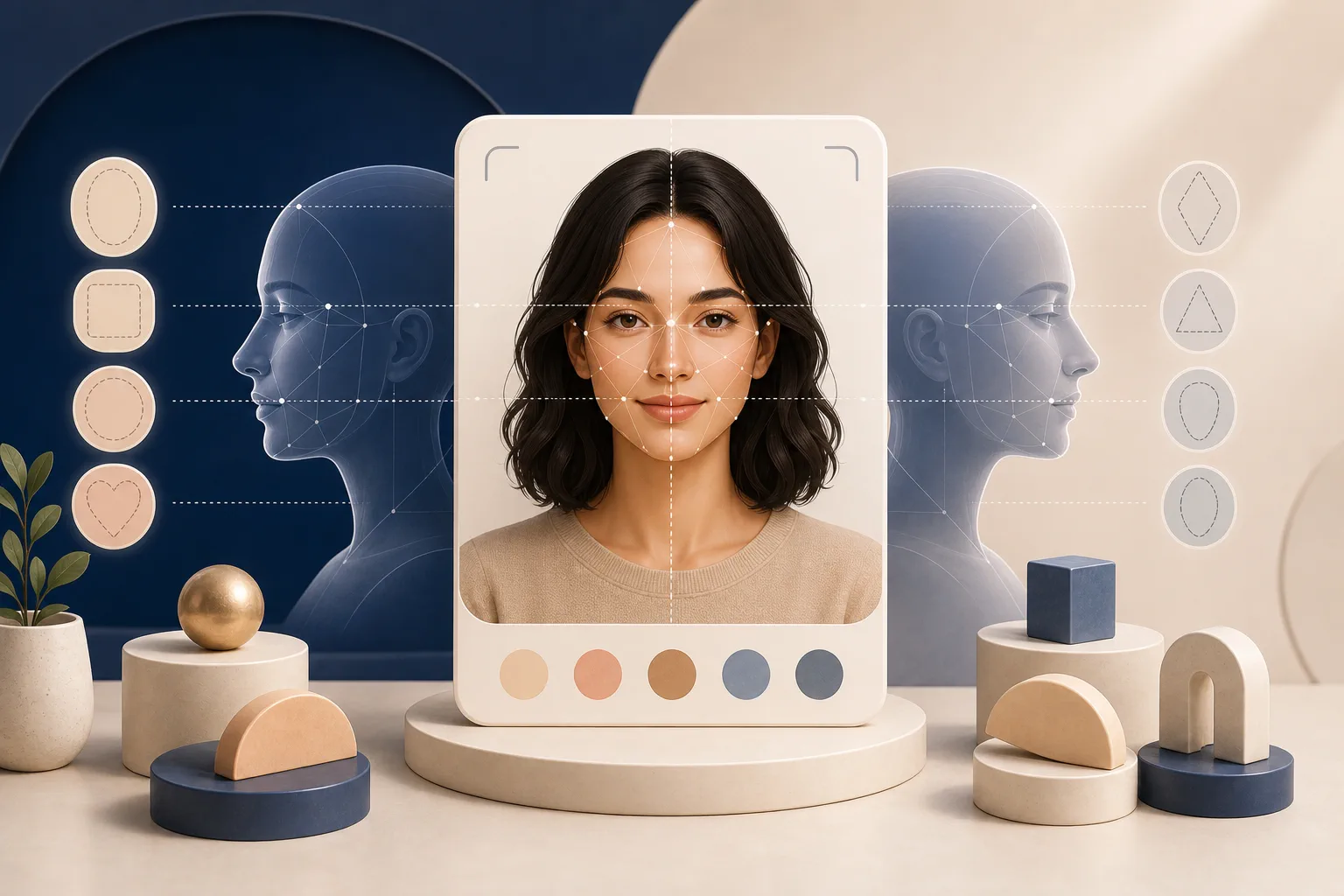
Face Asymmetry — A Gentle Self-Check and Natural Balancing
Face asymmetry is natural for nearly everyone. A gentle self-check, the limits of symmetry and golden-ratio numbers, and styling with parting, hair, and angle — a fun reference, not a judgment of the person.
Beard Styles by Face Shape: Framing Proportion with Line
A practical guide to matching beard and stubble styles to face shape. Round, long, square, heart, and oval shapes, plus neckline, cheek line, sideburn blending, and upkeep for a clean framed look.
Forehead, Chin, Cheekbone & Ear Face Reading — Traditional Takes on the Face Outline
Beyond eyes, nose, and lips, here's how traditional face reading once described the forehead, chin, cheekbones, and ears that shape your outline — purely as cultural storytelling and a styling reference, just for fun.
🔮 See it from a single photo
Curious how these ideas look on your own photo? Try the tool — entertainment only.
See my face-shape vibe →