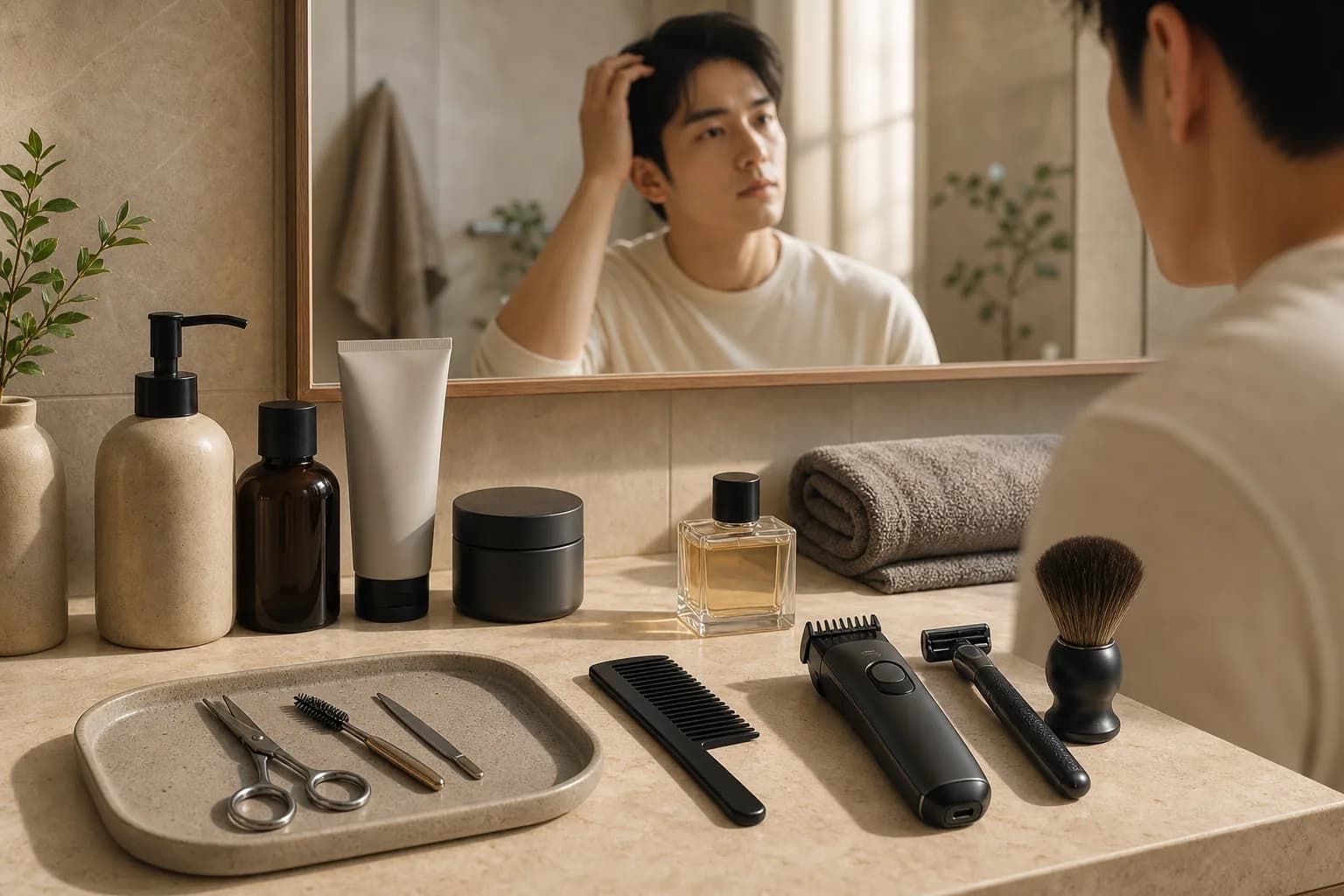
Grooming Is About Tidying Up, Not Dressing Up
When people first hear the word grooming, many imagine something elaborate, almost like makeup. But at its core, grooming is not about being flashy at all. It is about tidying up. The idea is to take that just-woke-up, slightly messy version of yourself and smooth it out a little, so that you and the people around you both feel at ease. Think of it less as expensive treatments and more as a habit you can start in five minutes a day, and most of the pressure disappears.
A put-together look really does help create a good first impression. That said, one thing is worth keeping in mind. An impression is only an impression, and it is not the same as a person's actual personality or ability. Neat eyebrows do not make someone diligent, and messy hair does not make someone lazy. So it is healthier to treat grooming not as a way to prove you are a better person, but simply as a small way to feel a little better about yourself today.
This article walks through five areas in order — brows, skin, hair, beard, and scent — in a way that anyone can follow, even if you have never given grooming a second thought. You do not need to start everything at once. Pick the one thing that bothers you most, try it for a single week, and once it feels natural, add the next item.
Brows — The Quickest Way to Change Your Look
Surprisingly, the feature that tidies up your overall look the fastest is your eyebrows. Brows take up little space on the face, but they sit right where people's eyes land, so cleaning up just a few stray hairs can make you look noticeably crisper and neater. Rather than trying to reshape them dramatically from the start, you will fail far less often if your goal is simply to make your existing brows look clean.
For basic tools, a pair of brow scissors, round-tipped tweezers, and a small comb are enough. Comb the brow hairs upward, then trim only the long hairs that stick out above your natural brow line with the scissors. Use the tweezers to remove the stray hairs between your brows and just below them, one at a time, and your expression instantly looks more open. It is safer to trim a little and check often rather than pluck a lot at once.
Daily — Comb and Set
Each morning after washing your face, simply combing your brows into place with a finger or a small comb is enough. If your brows tend to lie flat on one side or stick out, a touch of brow fixer or a clear mascara-type product will keep them tidy all day. At the daily level, focus on setting rather than plucking.
Weekly — Trim Strays and Length
Removing stray hairs and trimming length does not need to happen every day — about once a week is plenty. Touching them too often tends to make the line thinner or look unnatural over time. Once a week, under good lighting, check the mirror and lightly clear the strays between and below the brows, then trim any overgrown hairs. Remember to compare both sides to keep the left and right in balance.
Skin — Cleanse, Moisturize, and Protect Is Enough
Skincare can feel complicated, but at the beginner stage you really only need to remember three things: cleansing (washing well), moisturizing (keeping skin hydrated), and protecting it from the sun (sunscreen). These three form the basic skeleton, and you can add anything else one step at a time once you are comfortable.
Washing twice a day, morning and night, is the baseline. But scrubbing too hard or frequently using a harsh cleanser can actually dry your skin out and make it shinier in response. Lather a gentle cleanser with lukewarm water for about thirty seconds, then rinse lightly with cool water — that is plenty. After washing, it matters to apply moisturizer before your skin dries out, so the hydration gets sealed in.
The step many people skip is sun protection. UV exposure is widely known as one of the major causes of skin aging, so if you are often outdoors, adding sunscreen after your morning moisturizer is a helpful habit. If you dislike a sticky feel, choosing a lightweight formula makes it far less of a burden. Keep in mind, though, that this article shares general care habits for reference, and if you have a skin condition or serious irritation, consulting a professional is always the best move.
All Five Areas at a Glance
Here is everything so far, organized by area in the table below. Do the daily routine lightly every day, spend a bit more time on the one-to-two-times-a-week care, and treat the common mistakes as traps that beginners often fall into — knowing them in advance helps. The table is a starting point, not a rulebook. The wisest approach is to adjust the frequency and intensity while watching how your own skin and hair respond.
The one thing I want to stress is don't overdo it. The most common beginner mistake is letting enthusiasm get ahead of you — doing too much, too often, all at once. Starting small and building up slowly gives more natural results and fewer mishaps.
| Area | Daily routine | 1–2x weekly care | Common mistake |
|---|---|---|---|
| Brows | Comb and set in place | Trim strays and length | Plucking too much at once |
| Skin | Cleanse, moisturize, sunscreen | Exfoliate or deep cleanse once | Scrubbing hard, skipping moisturizer |
| Hair | Dry roots for volume | Regular cuts for length | Too much product, clumped look |
| Beard | Soothe and moisturize after shaving | Tidy neckline and lines | Cutting the line too deep |
| Scent | One or two light sprays | Check how scents layer | Overpowering, clashing layers |
Hair and Beard — Eighty Percent Is Drying and Lines
In hair styling, what matters most is often not the product but the drying. The same hair can fall flat or stick out unpredictably if you let it air-dry while wet, but if you direct the roots with a blow dryer, it settles far more naturally. Once your hair is about seventy to eighty percent dry, rub a small amount of wax or clay between your hands and spread it on, and you get hold without a greasy, clumped look. With product, less than you think is almost always the right answer.
Hair — Dry the Roots First
If your hair is flattened in the morning, mist it lightly with water and lift the roots with a blow dryer first. Drying as if gently raising the scalp with your fingers brings volume up naturally. Use product only afterward, as a finishing touch and in a small amount. Keeping a consistent length with regular cuts also lowers the difficulty of styling a great deal.
Beard — Lines and Moisture Are Key
Whether you grow a beard or shave it, clean boundary lines are what make it look tidy. If you shave daily, soften the skin and hair with warm water beforehand, then soothe and moisturize afterward to reduce irritation. If you grow it out, keep the neckline and the line below the cheekbone consistent, and a light touch of beard oil or balm reduces frizz. Cutting the line too deep can look awkward, so it is safer to trim a little at a time.
Scent and Finishing — Subtle, and Consistent
Scent is the finishing touch of grooming. Fragrance is a wonderful tool for self-expression, but at the beginner stage it is best to aim for a presence that is barely there — felt rather than announced. A scent that is too strong can be a burden to people nearby, so start light, with just one or two sprays on the wrist or the back of the neck. If it clashes with a heavily scented fabric softener or body wash, the result can become unintentionally muddled, so keeping your base simple is one good approach.
In the end, the most important thing in grooming is not flashy technique but consistency. A five-minute habit carried out every day creates a far better impression than an elaborate routine done once and abandoned. And please remember this once more: a well-groomed appearance does give a good impression, but an impression never tells the whole truth of who a person is. Enjoy grooming not as an obligation to look good for others, but as a small daily habit of taking care of yourself today, and that is more than enough.
Article info & references
Published June 7, 2026 · Last updated June 7, 2026
- General social-psychology concepts on first impressions, such as the primacy and halo effects
- Common skin-health knowledge on the link between UV exposure and skin aging
- Publicly available general guidance on personal-care and hygiene habits
- General fragrance basics such as top, middle, and base notes when testing scents