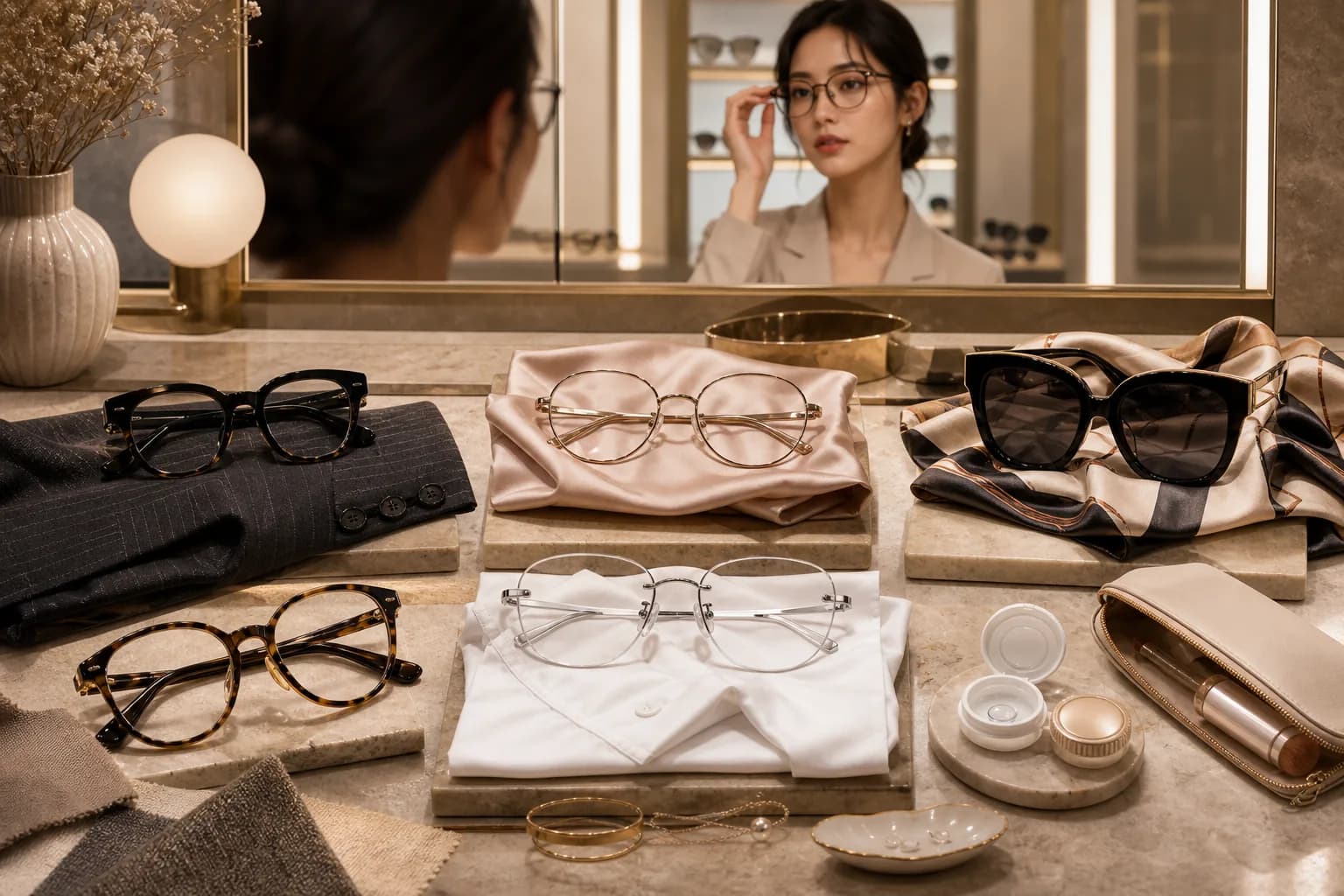
Why Eyewear Changes Your Impression — A Frame Is a Picture Frame for Your Face
Have you ever swapped one pair of glasses and watched the whole mood of a photo shift? That happens because eyewear sits right in the center of your face, framing the eyes — the very spot people tend to look at first. Just as a picture frame shapes how we read the painting inside, the thickness, color, and shape of your frames can make the same face read with a completely different mood. This isn't about rating looks; it's simply a styling reference for the vibe you want to present.
People tend to scan the eyes and the area around them first when they meet a new face. That is why glasses, sitting around the eyes, can set a first feeling even faster than your hair or outfit. A bold horn-rimmed frame emphasizes your outline, while a slim metal frame adds a light, tidy touch — small choices that nudge the overall mood.
There is one thing worth keeping in mind, though. The impression eyewear gives is only an impression — it is not the same as the person's real personality or ability. Wearing studious-looking glasses doesn't make anyone smarter, and a soft rimless pair doesn't make anyone genuinely kinder. Think of eyewear as a light, fun tool for choosing the mood you feel like showing that day.
Mood by Frame Material — Horn-Rimmed, Metal, Rimless
Frames split into different moods first by material and again by shape. Even the same round outline reads very differently as a thick horn-rimmed pair versus a thin metal one. Knowing the traits of each material makes it much easier to pick the right pair for the occasion, like choosing from a wardrobe.
In the subsections below, let's walk through the mood each of the three main materials creates. These are only general tendencies and there is no single right answer, so the best move is to try them in front of a mirror and go with whichever feels like you.
Horn-Rimmed (Acetate) — A Defined, Characterful Mood
Thick horn-rimmed frames have strong outlines that give the face a clear focal point. With a wide range of colors and patterns, they're great for showing personality and pair well with casual outfits. Their bold presence can also help the face look smaller, but if the frame is too thick it may feel heavy, almost covering the eyes. Starting with a moderate thickness is a comfortable first step.
Metal — A Light, Tidy Mood
Slim metal frames have thin lines that don't hide much of your natural look, adding a clean, put-together feel. The subtle accent of gold or silver tones is part of their charm too. They're a nice pick for tidy settings or a calm mood, but because the lines are so fine, your hair and makeup stand out more — so check the overall balance together.
Mood by Frame Shape — Rimless, Oversized, Sunglasses
Shape sways the mood as much as material does. Rimless frames, with almost no border, give a natural and effortless feel, while large oversized frames create a trendy, eye-catching look. Sunglasses add color on top of all that for yet another mood.
The table below compares five signature styles at a glance. It covers the impression each gives, the face shapes they tend to suit, and a small tip, so use it as a light reference when you're choosing in store. The face-shape column is only a suggestion based on general balance principles — if you try a pair and love it, that's the right answer.
Rimless and oversized in particular represent two ends of the mood spectrum. One is the barely-there, natural look; the other is unmistakable presence. Trying both on the same person can make the difference in vibe surprisingly fun to notice.
Rimless / Semi-Rimless — A Natural, Easy Mood
Rimless frames make the lenses look like they're floating, so it barely shows that you're wearing glasses. That makes them great for keeping your natural look or for someone new to glasses who wants an easy start. Since the accent is subtle, though, they can look a little plain — meeting in the middle with a lightly colored semi-rimless pair is a good option.
Oversized — A Trendy, Eye-Catching Mood
Big oversized frames become a fashion item in their own right. They cover much of the face and shift the mood dramatically, perfect for a trendy look. But if the frame is too large, your eyes may drift from the lens center or the frame may touch your cheeks, so it's most comfortable to pick a width that doesn't exceed your cheekbones.
| Style | Impression it gives | Face shapes it tends to suit | Tip |
|---|---|---|---|
| Horn-rimmed | Defined, characterful mood | Round, oval | Start with medium thickness; too thick can feel heavy |
| Metal | Light, tidy mood | Angular, oval | Lines are thin, so check balance with hair and makeup |
| Rimless | Natural, easy mood | Most shapes; smaller faces | If too plain, add a little color with semi-rimless |
| Oversized | Trendy, eye-catching mood | Long faces, oval | Keep within cheekbone width; avoid touching the cheeks |
| Sunglasses | Stylish, chic mood | Same shape principles apply | UV protection is a must; start with gray or brown lenses |
Between Glasses and Contacts — Tips for Switching
Glasses and contact lenses are both great mood-changing tools, but they feel different. Glasses bring the defined impression and styling accent the frame creates, while contacts add nothing to the face, letting your eyes and makeup show naturally. Moving between the two depending on your outfit and mood widens your range of expression a lot.
When you switch from glasses to contacts, the focal point the frame used to provide disappears, and the face can feel a bit bare. In that case, lightly grooming your brows or adding depth around the eyes with eye makeup brings the balance back naturally. Going the other way, from contacts back to glasses, you may want to ease up on makeup so it doesn't clash with the frame.
Because contacts touch the eye directly, hygiene and wear time matter. Stick to the recommended replacement schedule, and if your eyes feel dry or uncomfortable, don't push it — give them a rest with glasses. When you change your mood with color lenses, starting with a natural diameter rather than a very large one keeps things easy and flattering. If you're ever worried about your eye health, it's wise to consult an eye-care professional.
Balancing with Face Shape and Brows
The heart of eyewear styling really comes down to balance. People often say a frame that contrasts with the curve of your face shape brings things into balance. An angular frame helps define a round face, while a round frame adds softness to an angular one. A frame with some vertical depth tends to suit a long face, and a not-too-large frame tends to suit a smaller face.
Brows matter a great deal too. The top line of the frame usually sits near your brows, so the two are seen side by side. When the top of the frame lightly follows the brow line, the face looks naturally tidy; when it hides too much of the brow or the two are misaligned, things can look cluttered. When choosing glasses, use a mirror to check that your brows peek just above the frame.
Details like nose pads and temple length affect the mood too. If glasses keep sliding down or tilt to one side, even the prettiest frame ends up looking off. Simply getting a proper fitting in store so the frame sits cleanly on your face raises the polish considerably.
Choosing Eyewear by Occasion — and a Final Suggestion
The same person can suit different eyewear depending on the setting. For calm settings or a tidy mood, a slim metal frame or a neat square horn-rimmed pair fits well; for casual everyday wear, a colored horn-rimmed or round frame feels relaxed. Outdoors or while driving, sunglasses that protect your eyes are practical while still carrying the mood.
With sunglasses, always check for UV protection. A pair that's only dark without blocking UV can actually strain your eyes. Starting with neutral lens colors like gray or brown makes them easy to pair across many outfits.
To sum up, eyewear is a fun way to choose the mood you feel like showing that day. The impression a frame creates is only a mood — it doesn't tell you anyone's real personality or ability. Try a few styles lightly and find the frame that makes the you in the mirror feel most comfortable and happy. That's the eyewear that suits you best.
Article info & references
Published June 7, 2026 · Last updated June 7, 2026
- General social-psychology concepts of first impressions, such as the primacy effect and halo effect
- General eyewear-fitting principles, such as contrasting frame shape with face-shape curves
- General eye-safety basics for sunglasses, such as UV protection
- General eye-health recommendations, such as contact-lens hygiene and replacement schedules
- General portrait-photography principles, such as the rule of thirds