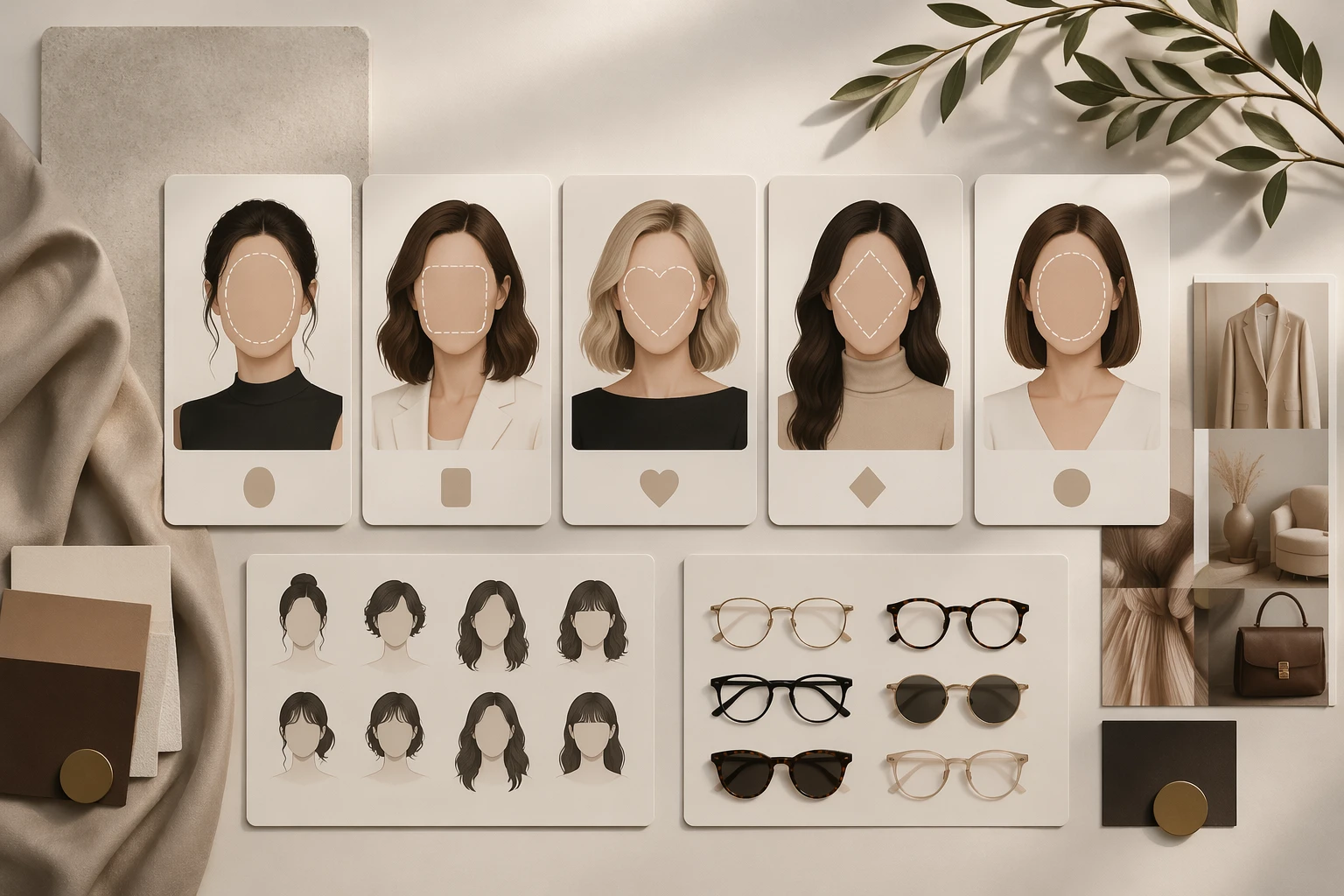
A hat designs the empty space above your face
Whether a hat suits you is less about face shape and more about the new outline the hat creates. Brim width, crown height, and the angle you wear it redraw the space above your forehead — which is why the same person reads completely differently in a beanie versus a bucket hat. The core rule is simple: shorten a long face, add length to a round one.
Round — height and angles add length
Round faces balance out with a touch of vertical length. High-crown fedoras, structured caps, and snapbacks work, and a slight tilt creates a straight line that slims the face. A flat beanie pulled down low can emphasize roundness — if you love beanies, wear them with some volume up top.
Oblong (long) — break the length with a brim
Long faces want their vertical length cut. Wide-brim bucket hats, wide-brim hats, and flat-worn beanies add a horizontal line that shortens the face. Avoid very tall crowns, which lengthen it further. The lower the brim sits toward your brows, the stronger the dividing effect.
Square — soften with curves
A defined jaw softens when you add gentle curves. Round-crown bucket hats, round-brim caps, and berets ease the angles. Strongly linear flat caps or sharp fedoras can emphasize the corners, so lean toward soft lines.
Heart / inverted triangle — weight downward
With a wide forehead and narrow chin, the top can read heavy. A medium-brim hat or a slightly-lowered beanie covers some forehead and rebalances. Avoid oversized crowns or upturned brims that emphasize the upper face.
Oval — almost anything works, but mind proportion
Oval faces suit most hats — the lucky shape. But "anything works" isn't "anything goes." Match the brim width to your head size: a big brim swallows a small head, while a too-small hat throws off proportions on a larger one.
Choosing in a store in one minute
When unsure, a photo beats the mirror. Take a front and side selfie with the hat on. Whichever shot makes your face look slimmer and more balancedis your answer. Angle and depth alone change the result, so compare two or three frames. It's all a for-fun styling reference.