The Key to Sunglasses Is 'Contrast' — and It Differs from Eyeglasses
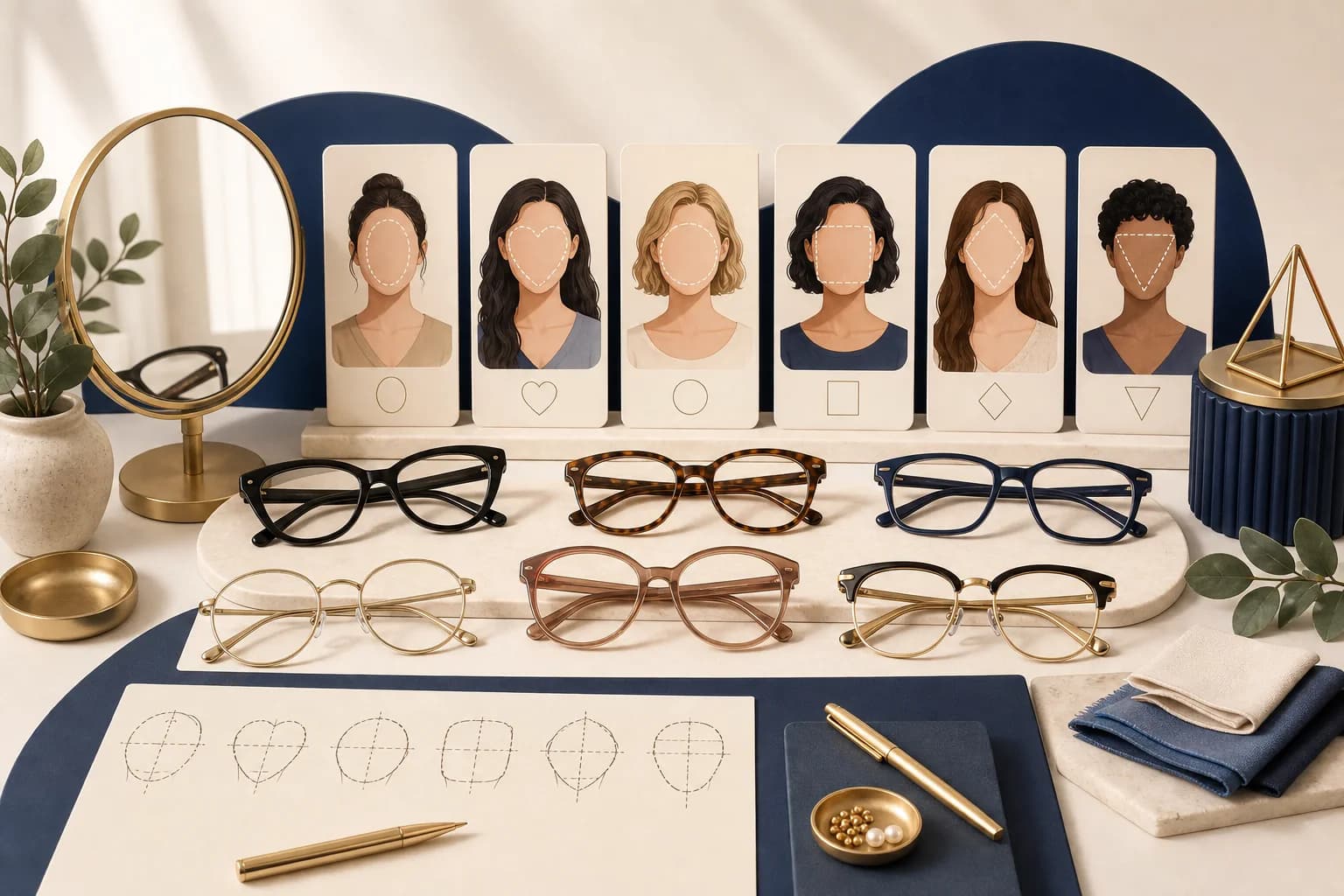
Have you ever swapped sunglasses on a sunny day and watched your whole vibe shift? Unlike clear prescription glasses, sunglasses have dark, large lenses, so they carry far more visual weight on your face. The same frame shape feels much bolder as sunglasses, and its fit with your face shape reads more clearly too. This is not about rating looks; it is just a styling reference for the mood you want to create.
The easiest principle for choosing sunglasses is 'contrast.' Angular frames balance round, soft faces, while rounded or softer lines ease the look of strong, angular faces. There is also a matching approach, where round sunglasses on a round face play up a cute, retro mood. There is no single correct answer; the standard is simply which vibe you like.
Just remember one thing. The impression sunglasses create is only an 'impression,' not a statement about someone's real personality or ability. Wearing chic aviators does not make someone aloof, and round sunglasses do not make anyone kinder. Enjoy them lightly as a tool for picking the mood you want to show that day.
Start by Loosely Gauging Your Face Shape
To use the contrast principle, it helps to know the broad feel of your face first. You do not need precise measurements; just sense in the mirror whether you read more round or angular, more long or short. With your fingers, loosely gauge the vertical length from hairline to chin and the horizontal width between your cheekbones; if the two are similar you lean round or angular, and if the vertical is longer you lean toward a long feel. This is just a fun self-check reference, and it does not pin people down by face shape.
Round, Angular, or Long — Just Catch the Feel
If your jawline flows softly, read it as a round feel; if your jaw and cheekbones are clearly angular, read it as an angular feel. If your face is long relative to its width, that is a long feel, and if forehead, cheeks, and jaw fall in similar widths, you are close to an oval. Oval tends to be balanced in proportion, so most sunglasses suit it easily. It is fine if you do not land on exactly one type, and if two feels mix, just go by the more dominant one.
Five Classic Sunglasses — Which Faces Do They Flatter?
Sunglasses split sharply in mood by shape. We will look at five classics: the crisp wayfarer, the retro round, the lift-giving cat-eye, the classic aviator, and the substantial square. Each shape has a different line angle and lens area, so the same face reads in a noticeably different mood depending on which you put on. The table below compares them at a glance, so use it as a light reference when shopping.
The 'flatters' column is only a suggestion based on general balance principles. In the end, if you try them on and love them, that is the right answer, and unexpected pairings are often the most striking. Snapping a photo or two under the store lighting helps you catch how they read indoors versus outdoors.
Wayfarer and Square — Crisp, Balanced Mood
The trapezoid-leaning wayfarer and the clean square have clearly angular lines, so they add crisp definition to round, soft faces. They sit easily on any outfit as a daily pick, which makes them great first sunglasses. That said, an angular face in an equally angular frame can read more intense, so picking a version with slightly rounded corners feels more relaxed.
Round, Cat-Eye, and Aviator — Soft or Eye-Lifting Mood
The round shape softens the sharpness of an angular face and adds a retro mood. The upswept cat-eye draws the eye up above the cheekbones for a brighter feel, while the teardrop aviator fills out face length nicely and adds a classic air. Round and aviator tend to suit long or angular faces especially well, while a cat-eye on a round face can be a point that breaks up a flatter look. Here too the real answer is how you feel in the mirror.
Size, Lens Tint, and Nose Bridge — Details Finish the Mood
Even the same shape shifts in impression with lens size and color. Large lenses with a dark tint carry heavy visual weight for a chic, commanding mood, while small lenses in light tints feel airy and easygoing. Add frame thickness and material and the mood splits even more finely: thin metal feels neat and light, while chunky acetate feels casual and sturdy. Knowing the details makes it much easier to pick the same frame to fit the occasion.
Frame Width Goes by Your Face Width and Brows
When the horizontal width of your sunglasses falls close to your face width, it looks most balanced. If the frame is much wider than your face, it tends to slide down, and if it is too narrow, your face can look larger. It looks natural when the top line lightly covers the brows or follows their curve, while brows showing far above the frame can feel disconnected. Checking that the temple tips do not pinch your ears and that the lower lens does not press marks into your cheeks keeps it comfortable for long wear too.
Lens Color and Nose Pads Change the Vibe by a Hair
Black and gray lenses are a safe match for anything, brown and amber bring a soft, warm mood, and mirror or colored lenses create a bold, attention-drawing mood. Polarized lenses cut reflected glare off water and roads, so they suit glare-heavy situations like the beach or driving, giving a crisp view that differs from a plain tint. Nose pads matter more than you would expect; if your bridge is on the lower side, a thicker Asian-fit pad cuts slipping and sits more crisply. If your cheekbones stand out, choosing a curvature that keeps the lens off them feels more comfortable.
| Sunglasses | Impression | Flatters | Small tip |
|---|---|---|---|
| Wayfarer | Crisp, daily mood | Round, oval | Safe first pair |
| Round | Retro, soft mood | Angular, heart | Adjust with thickness |
| Cat-eye | Bright, lifts the eye | Round, angular | Tips above cheekbones |
| Aviator | Classic, chic mood | Long, angular | Check nose-pad fit |
| Square | Substantial, balanced mood | Round, oval | Check corner curvature |
Enjoying Sunglasses by Season and Occasion
Sunglasses are a great item for shifting your mood by season and setting. In summer go bright with large lenses and light-colored frames, in transitional weather keep it airy with a faint tint, and on winter snow or in the city go chic with dark lenses, so the same outfit reads differently. Under strong midday sun a darker tint feels comfortable, while on cloudy days or when you move in and out a lot a lighter tint feels less stifling.
At the beach or on a trip, a substantial aviator or oversized frame plays up a resort mood, while a crisp wayfarer suits a clean city daily look. Matching within a tone of your outfit, or adding a slight contrast, tends to make the whole look feel more put together. For example, a brown frame melts softly into beige and ivory outfits, while a black frame becomes a clean accent on monotone looks.
In the end, sunglasses are a small accessory that easily switches up your mood and feel for the day. The very process of trying various shapes and discovering which vibe you like is the fun part. Rather than following an answer someone set for you, it is best to pick the mood you love most in the mirror.
What to Keep in Mind While Enjoying Sunglasses
Everything here is a fun styling reference about 'impression' and 'mood.' Saying one pair suits you better is only a general suggestion about balance, not a measure of a person's worth or character. FaceOracle's image mood report is the same kind of for-fun vibe reference, and it does not judge your personality or ability.
So when picking sunglasses, do not get too tied to 'rules'; choose the pair that makes you feel good when you wear it. The contrast principle is only a starting point, and the best sunglasses are the one pair that brings a smile in the mirror. When you really cannot decide, it is a good move to set down one safe daily pair first and slowly add a mood pair later. Go find a pair that matches your mood under today's sunshine.
Frequently asked questions
Do sunglasses and prescription glasses use different face-shape rules?
The basic contrast principle is similar, but sunglasses have darker, larger lenses with more visual weight, so it pays to consider the frame size more carefully. A thickness that felt fine in clear glasses can read much bolder as sunglasses. Even with the same shape, it is worth trying the sunglasses version on its own before choosing.
I already wear glasses — can I use clip-ons instead of prescription sunglasses?
Yes, clip-ons that attach over your glasses are a perfectly good choice for blocking sun. Just note that the frame shape can get masked by your existing glasses line, so the mood may not show as well, and keeping a separate pair of prescription sunglasses is one way to capture the vibe. This is a matter of convenience and taste, so there is no single right answer.
If I buy just one pair, which sunglasses are the most versatile?
A wayfarer or square with slightly rounded corners in black or gray lenses tends to be a safe, high-versatility daily pick. It layers onto most outfits and seasons without much fuss. That said, this is only a general tendency, and the one pair you reach for most often is ultimately your best choice.
Article info & references
Published June 13, 2026 · Last updated June 13, 2026
- The wayfarer is known as a classic acetate sunglasses design that emerged in the 1950s.
- The aviator originated from teardrop-shaped metal frames originally made for pilots.
- A dark lens tint lowers visible-light transmission, which helps reduce glare.
- The cat-eye, with its upswept tips, is a classic shape popular in the 1950s and 1960s.
- Frame width is generally considered balanced when it sits close to your face width.