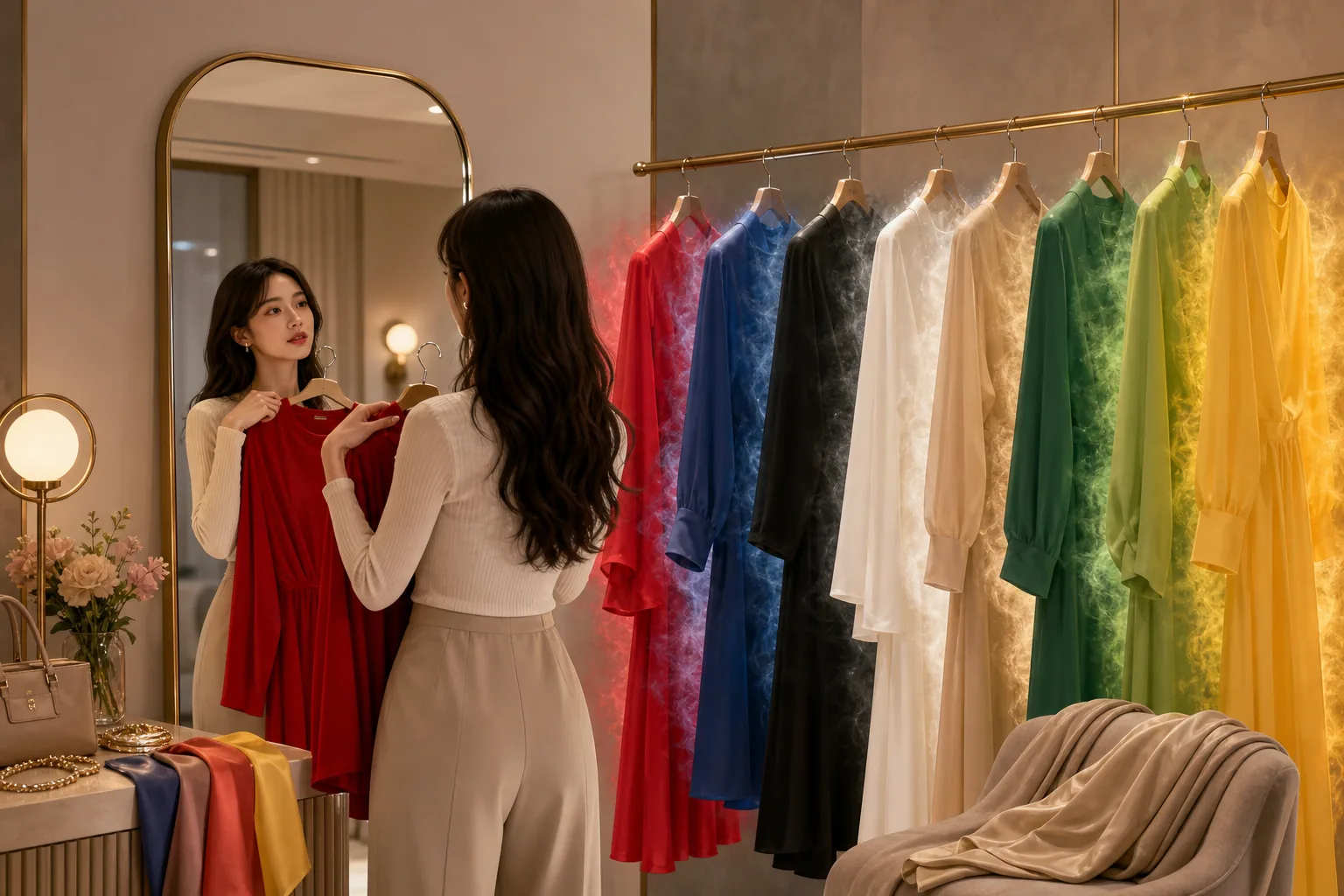
Three reasons color shapes impression
We have all stood in front of the closet wondering which color to wear. Keep the same design and change only the color, and the mood in the mirror shifts noticeably, because color speaks to our eyes and memory faster than almost anything else. Color registers before shape or text, so it does a lot of the work in setting the tone of a first impression. Let's flag one thing up front, though: what color creates is an impression, not a readout of someone's actual personality or ability.
The first reason color shapes impression is association. Just as red brings fire and passion to mind and blue brings sky and water, we automatically attach experience-based images to colors. The second is culture and context. The same white can suggest purity at a wedding and formality or cleanliness elsewhere, so its meaning shifts with the setting. The third is contrast. What draws the eye is less the color itself than how different it is from its surroundings, which is why one vivid color stands out clearly in an otherwise muted setting.
These three layers overlap, so a color makes us read a mood like calm or lively. The key point is that this is the viewer's association. The same red can feel like confidence to one person and intensity to another, so color is less a correct answer than a dial for adjusting mood. Read this article that way too: not as which color means which person, but as which color adds which atmosphere.
The mood of warm and cool colors
The easiest starting point for sorting colors is to split them into warm and cool. Warm colors tend to add approachable energy, while cool colors add a step-back calm. The table below gathers each color's impression at a glance, so use it like a mood menu when you pick an outfit.
Warm colors — red, orange, yellow
Reds and oranges catch the eye and add vitality. Red lends confidence and energy, orange adds friendliness and cheer, so they are great when you want a bright, outgoing impression. Over a large area they can feel heavy, though, so used as an accent the effect reads more clearly.
Yellow gives the brightest, most upbeat impression among warm colors. It adds a cheerful, friendly mood, but at high saturation it can look light, so a slightly toned-down mustard or butter yellow is easier for everyday wear. Just remember that the same yellow can evoke different feelings depending on the tone.
Cool colors — blue, green
Blue is often used to add an air of calm and trust. Deep blues like navy in particular create a neat, stable impression that suits formal settings well. A bright sky blue, by contrast, leans toward a cool and gentle feel.
Green calls to mind nature and rest, adding a relaxed, balanced mood. Muted greens like khaki and olive give an easygoing impression, while a vivid green reads as lively. Cool colors generally offer a step-back sense of space, so they are a dependable choice when you want to look composed.
| Color | Impression | Fitting settings | Caution |
|---|---|---|---|
| Red | Confidence, energy, vitality | Accents, presentation pop | Can feel heavy over a large area |
| Blue | Calm, trust, neatness | Interview, talk, formal settings | May read cold depending on tone |
| Black | Formality, polish, order | Formal settings, suits | All-black can feel hard to approach |
| White | Clean, honest, fresh | Trust-driven settings, summer | Looks dull if not kept neat |
| Beige | Comfort, warmth, easygoing | Daily wear, base color, gatherings | Can look flat without an accent |
| Green | Nature, balance, ease | Casual gatherings, daily wear | Vivid tones can divide taste |
| Yellow | Cheerful, friendly, upbeat | Dates, spring-mood accents | High saturation can look light |
Neutrals — black, white, beige
We wear neutrals as often as we wear bright hues. Rather than sending a strong message on their own, black, white, and beige support other colors or lay down the background of a look. They are known as low-risk colors, but knowing that each still carries its own impression widens how you can use them.
Black adds formality and polish. It creates a clean, put-together impression and is strong for formal occasions, but head-to-toe black can feel hard to approach. In that case, mixing in a piece of beige or a lighter tone softens the look. White gives a clean, honest impression that suits settings where trust matters, while neutrals like beige and ivory create a comfortable, warm mood that pairs easily with almost any color.
The biggest strength of neutrals is that they make other colors stand out. A red accent over beige, a navy jacket over a white shirt: when the base is calm, the accent color comes alive more clearly. If color combinations feel hard, start by setting a neutral base and adding just one accent color.
Color strategy by setting — interview, date, talk
A color's impression changes with the setting it appears in. The same color can read as steadiness in an interview and friendliness on a date, so choosing for the occasion makes mood-tuning much easier. Below are three common situations as examples. Remember these are only mood suggestions, and that what matters most is being neat and at ease.
Interview and talk — trust and calm
In settings where trust matters, like interviews and presentations, colors such as navy, calm blue, and beige add a stable mood. Deep blue gives a neat, dependable impression, while beige and grey create a soft, comfortable one. Rather than very flashy colors, a calm base with a single accent tends to look composed.
For a talk, consider the distance to your audience too. If you want the mood to carry clearly from afar, adding one vivid accent color over a neutral base is effective. Still, color only supports you; your prepared content and a relaxed expression remain the center of the impression.
Date and gathering — warmth and energy
For a date or a casual gathering, approachable warm colors suit well. Slightly desaturated colors like soft coral, mustard, and pale green create a friendly, comfortable mood. Mixing one lighter piece into an all-dark outfit also makes your expression look brighter.
Of course, it matters that your manner feels natural when you wear the color you are most comfortable in. Color is only a tool that nudges the mood a little; your ease that day and a genuine conversation shape the impression most. Rather than fixating on color, enjoy a light choice like wanting to look a touch brighter today.
Color combinations and the area rule
Once you know each color's impression, how you mix them completes the mood. Combinations look complex, but one area rule makes it far easier. A stable approach splits a look roughly 70 base, 25 secondary, 5 accent. Give the largest area to a calm base color and the smallest to an eye-catching accent, and the balance falls into place.
If mixing feels hard, varying only the tone within the same family is the lowest-risk method. Beige with brown, sky blue with navy: shifting brightness within one family looks naturally tidy. If you want clear contrast instead, pair one warm and one cool color but keep one of them small in area so it works only as an accent.
Remember too that an accent color grows stronger the less of it there is. A red bag or a mustard scarf puts a vivid color in a small area, drawing the eye without breaking the overall mood. When you want to use many colors, lowering saturation to match tones keeps a multicolor look from feeling busy. In the end color combination is balance more than rules, and stepping back from the mirror to read the whole mood is the best guide.
It changes with culture and context (a caution)
Finally, one important caution. A color's impression varies endlessly with culture, context, and the viewer. A color that signals a bright mood in one culture may read differently in another, and the same color evokes different feelings in a workplace, a celebration, or everyday life. So there is no formula that says this color always means this.
And please keep this in mind: the color of your clothes does not tell you about a person's personality or heart. Color is only a tool that lightly tunes the mood of a first impression; an impression is just an impression and is not the same as actual personality or ability. Wearing red does not make someone more passionate, and wearing black does not make them colder. Color only supports the mood you want to show that day.
So enjoy this article as a set of mood suggestions, not an answer key. The best standard when choosing color is, in the end, whether you feel comfortable and natural. Your manner is most natural in a color you find comfortable, and that ease makes a better impression than any single color. Stand at your closet, think lightly about the mood you want to give off today, and pick.
Article info & references
Published June 7, 2026 · Last updated June 7, 2026
- General color-science concepts such as hue, value, and chroma in systems like the Munsell color system
- General social-psychology concepts on first impressions, such as primacy and halo effects
- Widely used design and color-matching principles such as contrast and visual emphasis
- General discussions in color anthropology that color meanings vary by culture and context