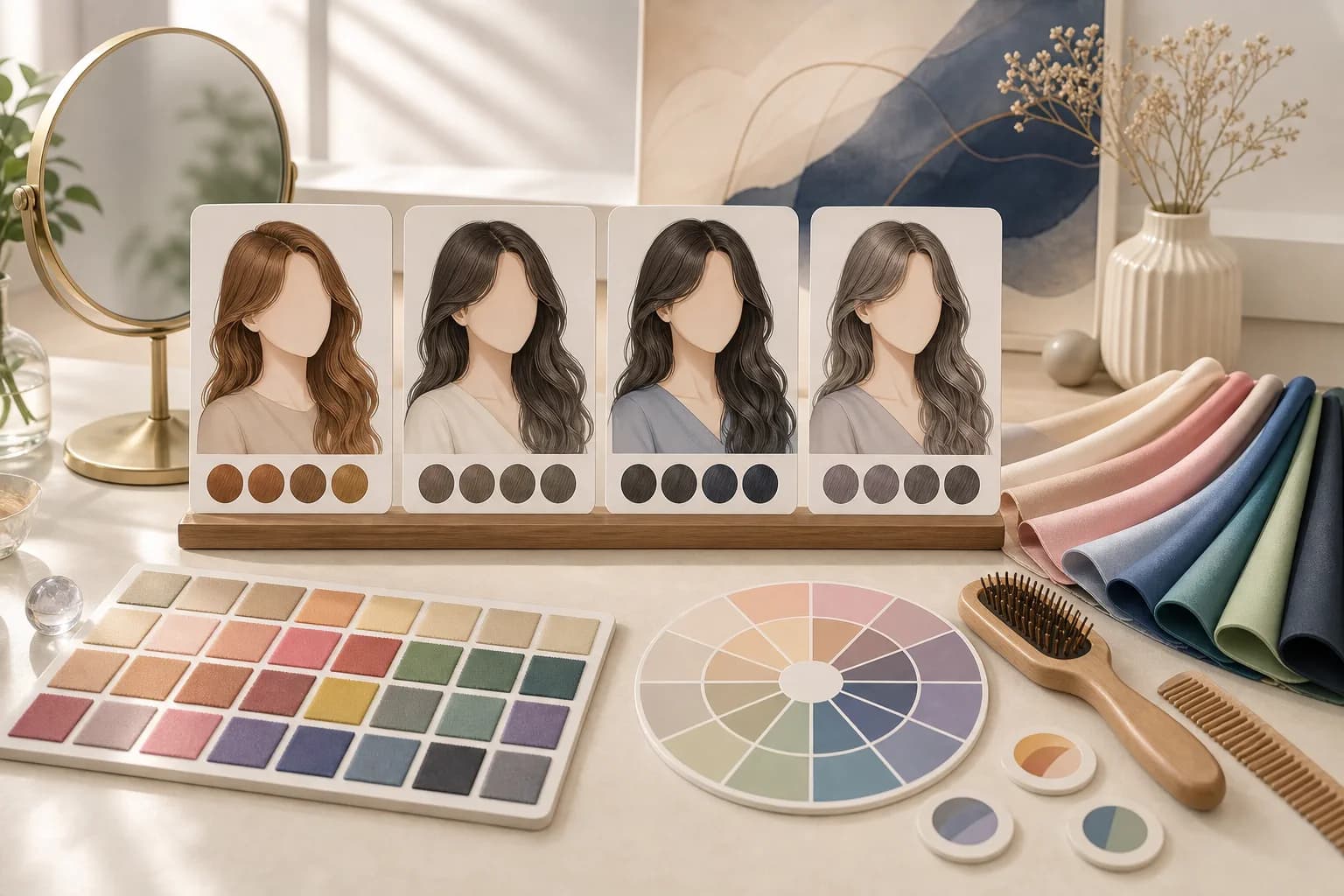
Why Frame Color Shifts Your Impression — It Sits Right Beside Your Face
Have you ever ordered new glasses and found your face looking brighter — or, the opposite, somehow duller? That happens because the frame places color in the spot closest to your face, right beside your eyes and cheeks. Clothes and bags sit at a distance, but a frame's color touches your skin tone directly, so it affects your complexion and overall mood more than you'd expect.
Personal color is a styling concept that sorts the warmth or coolness (the undertone) of the colors that suit each person. The reason the very same brown frame flatters one person as a yellow-leaning havana and another as a grayish brown comes down to this undertone. So when you pick a frame color, looking at 'does this match my tone?' alongside the shape leaves you much happier with the result.
One thing to keep in mind, though. Both personal color and the impression a frame creates are only a fun mood reference. Wearing a certain color does not judge anyone's personality or ability. This isn't a test with right answers — just enjoy it lightly, as a game of choosing the color that feels good in the mirror.
A Quick Self-Check for Your Undertone
Before picking a frame color, lightly figuring out whether your tone leans warm or cool makes the choice far easier. You don't need fancy equipment — a mirror and natural light at home are enough. Wearing a white tee with a bare, makeup-free face makes the tone difference show more clearly, so keep that in mind. Comparing just the two things below already points you in a rough direction.
Since this is a self-check that reads tendencies, it won't split cleanly down the middle. If you're unsure, you're likely neutral, so go ahead and try both sides lightly. For more detailed steps, the personal color self-check article walks through the wrist and metal tests, so it's worth reading together.
Reading Your Wrist Vein Color
In bright light, look at the veins on the inside of your wrist. If they look greenish, you likely lean warm; if they look blue or purple, you likely lean cool. If the color is mixed and hard to tell, you're closer to neutral. It shifts under different lighting, so be sure to check in natural light.
Reading It with Gold vs. Silver Accessories
If your skin looks brighter against gold accessories, you likely lean warm; if it looks crisp and clean against silver, you likely lean cool. The same standard carries straight over to choosing gold or silver metal frames, so doing it once is broadly useful. If both suit you, you're neutral and have a wide range of options.
If You're Warm — Havana, Brown, Gold, Warm Amber
Warm tones, with yellow or peachy skin, let warm-family frames melt in softly. The headliner is havana (demi), the tortoiseshell pattern. Its mix of brown and golden light adds natural warmth to the face. Deep chocolate brown and khaki work well too, and for metal, gold and rose gold are great fits.
If you're a bright, vivid warm tone, light and translucent colors like warm amber or pale beige and wood tones come across fresh. Pitch-black frames, on the other hand, can clash too sharply with your face and look dull, so if you really want black, try dropping it a tone to a matte dark brown.
This is only a general tendency, not an absolute rule. Even within warm, the saturation that suits you changes with how light or dark your hair is, so try havana and dark brown side by side in store and go with whichever makes your face look brighter.
Splitting Warm Once More into Spring and Autumn
Even within warm, spring-warm and autumn-warm suit slightly different saturations. Bright, clear colors like coral and light gold flatter spring-warm, while deep, calm colors like khaki, mustard, and deep brown blend better with autumn-warm. When the two get confusing, hold a bright havana and a deep toffee shade side by side and follow whichever makes your face look more defined.
If You're Cool — Black, Gray, Silver, Blue, Burgundy
Cool tones, with pink or bluish skin, are lifted by crisp, clean colors. The classics are black and charcoal gray. They define the facial outline sharply and pair easily with any outfit. For metal, silver and gunmetal add a cool, modern feel.
If you want color, deep blue, wine-toned burgundy, and plum melt elegantly into cool-toned skin. Burgundy in particular is popular because it adds life to the face without being too loud. Strongly yellow havana or gold, by contrast, can make cool-toned skin look sallow, so if you do reach for brown, choose a calm, grayish one.
Cool tones tend to look sharper when you play up contrast. Black frames on light skin pull the eye with crisp black-and-white contrast, while a desaturated gray or smoky blue gives a softer finish if you want a calmer impression.
Splitting Cool Once More into Summer and Winter
Cool also splits into summer-cool and winter-cool, and the moods differ quite a bit. Soft, muted colors like rose brown, soft gray, and lavender suit summer-cool, while crisp, deep colors like jet black, true white, and deep burgundy support winter-cool better. If a too-muted color makes your face look hazy, go one tone deeper; if a too-deep color feels heavy, go one tone lighter.
Neutral and Clear Frames — Versatile Across Tones
If you're neutral (including olive tones), leaning neither strongly warm nor cool, you can pretty much carry most colors. That's an advantage of wide choice, but it can also make deciding harder. In that case, starting from middle tones like a not-too-warm, not-too-cool tort, camel, or taupe leaves little room for error.
The clear and translucent frames that are so popular now are a versatile pick that barely depends on tone. Their faint color clashes little with skin, showing less that you're wearing glasses while still adding a subtle accent. Fully clear can look a touch plain, though, so warm tones can choose a clear with a hint of brown or champagne, and cool tones a clear with a hint of gray or blue, to bring the tone to life.
Match Your Hair and Skin, or Add Contrast?
There are two directions for choosing a frame color. Matching within a tone of your hair makes the whole look calm and put together, while deliberately adding contrast creates a sharp focal point. Black or charcoal on dark hair is steady, and havana blends warmly with light hair. If you want a different mood, try contrasting against the opposite family of your hair color.
The Color Beside Your Face Shifts the Whole Impression
Even the same person reads with a different complexion and mood depending on the color placed right beside the face. Warm colors tend to create a soft, friendly mood, while cool colors tend to create a sharp, chic one. This too is only mood styling — it does not pin down the person's real self, so enjoy it freely.
| Undertone | Frame colors that suit | Metal color | Watch-outs / tips |
|---|---|---|---|
| Warm | Havana, brown, khaki, warm amber | Gold, rose gold | Drop pitch-black to dark brown |
| Cool | Black, gray, blue, burgundy, plum | Silver, gunmetal | Avoid strongly yellow gold or havana |
| Neutral | Mid tones like tort, camel, taupe | Both gold and silver | Start mid-tone for fewer misses |
| Clear (all) | Warm=champagne tint, cool=gray/blue tint | - | Fully clear is plain; add a faint tint |
Tips to Avoid Mistakes — and a Final Word
When choosing in store, be sure to check the mirror near natural light. Store lighting often skews yellow, so colors look warmer than they really are. If you want to compare with photos, shoot several colors at the same angle in natural light without filters and view them side by side — the difference shows clearly.
Saturation and finish matter as much as color. The same brown finishes flashy in glossy and calm in matte, so pick to match the mood you want. Frame thickness also sways the impression a lot: a thin metal frame feels light and tidy, while a thick acetate frame feels bold and full of character. And since frame color is seen together with your brows and hair, check the balance within the whole face rather than judging the glasses alone.
To sum up, choosing frame color by personal color is a fun guide that points you toward the right direction of colors. Just remember the big picture: warm leans havana and gold, cool leans black, silver, and burgundy, and neutral and clear are close to all-purpose. In the end, the color that makes the you in the mirror look brightest and happiest is the frame that suits you best.
Frequently asked questions
Do my frame color and hair dye color have to match exactly?
They don't have to be identical — matching within about a tone makes the whole look calm and put together. On the flip side, deliberately adding contrast, like a dark frame on light hair, creates a sharp focal point that livens up the mood. There's no single right answer, so compare both lightly in the mirror and go with what you like.
If I'm buying two pairs, which color combo is the most versatile?
Make one a basic color that goes with anything (dark brown or havana for warm, black or charcoal for cool) and the other a mood-changing accent color (burgundy, clear, gold metal, and so on). Wear the basic for tidy settings and the accent on casual days, and the same person can read with a totally different mood.
I'm not sure of my personal color — is there a safe frame color to start with?
A mid brown like tort or camel that barely depends on tone, or a lightly tinted translucent frame, is the safest starting point. These colors don't go far wrong whether you're warm or cool. For the record, personal color and frame color are only a fun mood reference and do not judge anyone's personality or ability.
Article info & references
Published June 13, 2026 · Last updated June 13, 2026
- General color-styling concepts, such as the warm, cool, and neutral undertone categories of personal color
- Common self-check methods for undertone, such as comparing wrist vein color and metal accessories
- General knowledge about color contrast, such as how a color next to the face affects complexion
- General information on eyewear frame color names, such as havana (demi), charcoal, and burgundy
- General lighting recommendations for choosing colors, such as checking under natural light