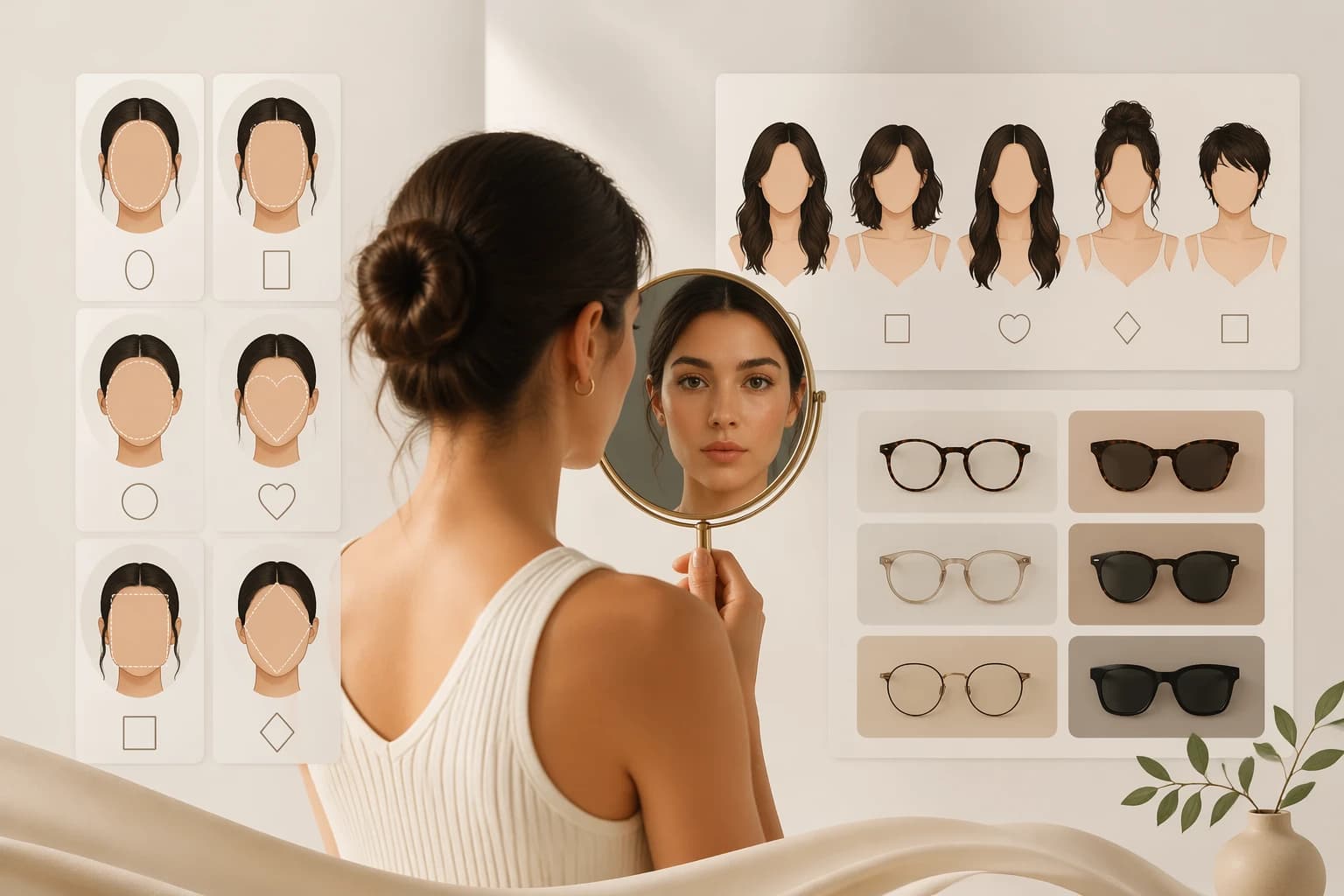
The Animal-Face Test — You Can Walk Through It Yourself
Am I a dog face or a cat face? You have probably wondered at least once. An animal face is a playful way to liken a face to an animal's vibe. There is no official answer handed down; it is closer to a game where you look at a few traits — eye line, contour, mouth corners, overall mood — and pick the closest feel. This article lays out that process as a self-check walkthrough you can follow on your own.
The commonly named animal faces come in eight: dog, cat, fox, bear, rabbit, deer, dinosaur, and wolf. Each type's detailed traits and matching styles live in a separate catalog, and here we focus on narrowing down which one you sit closest to, step by step.
A light promise before we start. An animal face is a fun label for a vibe; it is not a way to rank looks or judge personality. Sitting between two types is perfectly fine, and being a mix is actually more common. If you like your result, enjoy it; if not, just browse the other types lightly.
Before You Start — Prep One Good Selfie
How well a self-check works turns on a single photo. The best is one taken head-on at eye level in something close to natural light. Shooting from above narrows the chin and from below widens it, which shakes your read on contour. Keep your expression relaxed and natural; a wide smile can make your usual eye line and mouth corners look different.
Tidy your hair so the forehead and the side of the face show a little, which makes the contour easier to gauge. If bangs cover the eyes, the eye line gets lost; if side hair hides the jaw, the face shape does. If one photo leaves you unsure, compare two — head-on and a slight 45-degree side. It reads much more clearly.
And the most important mindset: this is play, not an exam. It is fine if the checkpoints do not match perfectly, and fine if several types come to mind at once. The steps below are just a guide for narrowing to the closest one, so follow along comfortably.
Narrow It Down with a 4-Step Checklist
Now to narrow things down for real. The method is simple: eye line, then face contour, then mouth corners, then overall mood — check these four steps in order and trim the candidates. The table below shows the four steps at a glance. At each step, pick which side you sit closer to; the type that keeps showing up across steps is your closest animal-face candidate.
After the table, the next two sections unpack why each step splits the way it does, by eye line and contour, then mouth corners and mood. If a step straddles both branches, just keep both types as candidates. There is no need to force a single pick.
| Step | Checkpoint | If close → candidate types |
|---|---|---|
| Step 1 · Eye line | Lifted and defined vs round and gentle | Defined → cat/fox/wolf / Gentle → dog/rabbit/deer |
| Step 2 · Contour | Slim V or heart vs round and plump | Slim → cat/fox / Round → dog/bear/rabbit |
| Step 3 · Mouth corners | Slightly lifted vs calm and level | Lifted → dog/rabbit / Level → cat/bear/wolf |
| Step 4 · Overall mood | Chic / gentle / dependable | Chic → fox/wolf / Gentle → deer/dog / Dependable → bear/dinosaur |
Steps 1 and 2 — Eye Line and Face Contour
The first two steps are eye line and contour, which split the impression the most. Pinning down just these two cuts your candidates nearly in half.
Step 1: Eye Line
First, look at the eye line. Eyes with a slight upward outer corner and a defined line often sort into chic moods like cat, fox, and wolf. Round, large eyes, or a gentle line that dips slightly at the end, lean toward dog, rabbit, and deer. Bear and dinosaur split more by overall weight and defined features than by eye line, so leave them as candidates for now.
Step 2: Face Contour
Next is contour. A slim, defined V or heart shape pairs well with cat and fox, while a round, plump contour suits dog, bear, and rabbit. Deer faces are often slim yet gentle in mood, and dinosaur faces tend to show a defined individuality in features or contour. By here, your candidates should be down to two or three.
Steps 3 and 4 — Mouth Corners and Overall Mood
The remaining two steps are mouth corners and overall mood, which split the finer vibe. Here you gather the two or three candidates from before into one.
Step 3: Mouth Corners
Mouth corners split the mood finely. Slightly lifted corners add the friendly, lively mood of dog and rabbit, while a calm, near-level mouth brings out the chic or dependable mood of cat, bear, and wolf. The same eye line can shift quite a bit by mouth corners, so check your mouth with a neutral expression in the mirror.
Step 4: Finish with Overall Mood
Last is the overall first impression. A chic, urban mood is close to cat, fox, and wolf; a gentle, friendly mood to dog, rabbit, and deer; a dependable, cozy mood to bear and dinosaur. Where the type that kept overlapping across the earlier steps meets your overall mood is your closest animal-face candidate.
Enjoy the Result, and How to Look Closer
Once you have narrowed the candidates, it is time to look into that type's detailed traits and matching styles. A catalog gathering all eight animal faces in one place lets you compare each type's eye line, contour, mood, and style notes at once, from dog to wolf. If your self-check straddled two types, setting them side by side to compare is fun too.
If you want a faster check, you can also upload a photo. FaceOracle's AI image mood report is a tool that shows the vibe a photo gives off, just for fun, so comparing it next to your self-check result adds another layer of fun. Just remember it is a mood expression, not face recognition or identity verification.
Above all, an animal face is not an exam to get right but a playful way to express yourself. Whatever type came up is just a light label for one way you read, and your real charm does not fit into a single type. Enjoy the result with a smile and simply take the style hints you like.
Frequently asked questions
How is an animal face decided? Is there an exact standard?
There is no clean official standard. An animal face is a fun expression that likens traits like eye line, contour, mouth corners, and overall mood to an animal's vibe, so it can vary by who is looking. The 4-step checklist here is just a guide for narrowing to the closest one, not an absolute diagnosis.
I seem to fit two animal faces. Is that okay?
Very common. Most faces are a mix of two or three types rather than landing cleanly in one. Your eye line might read cat while your mouth corners read dog, for example. In that case keep both as candidates and take the style hints from whichever you like.
Is checking my animal face with AI more accurate?
An AI report only shows a photo's vibe for fun; it does not guarantee an answer. Comparing it next to your self-check adds fun, but neither judges a person's personality or ability. Please remember it is a mood expression, not face recognition or identity verification.
Article info & references
Published June 27, 2026 · Last updated June 27, 2026
- General cultural concepts that liken a face to an animal's vibe, such as face reading and animal-face talk
- General social-psychology concepts such as the primacy and halo effects on first impressions
- General public guidance on head-on photos under even lighting, such as passport photo specs
- General visual-design concepts of contrast and balance in shape perception