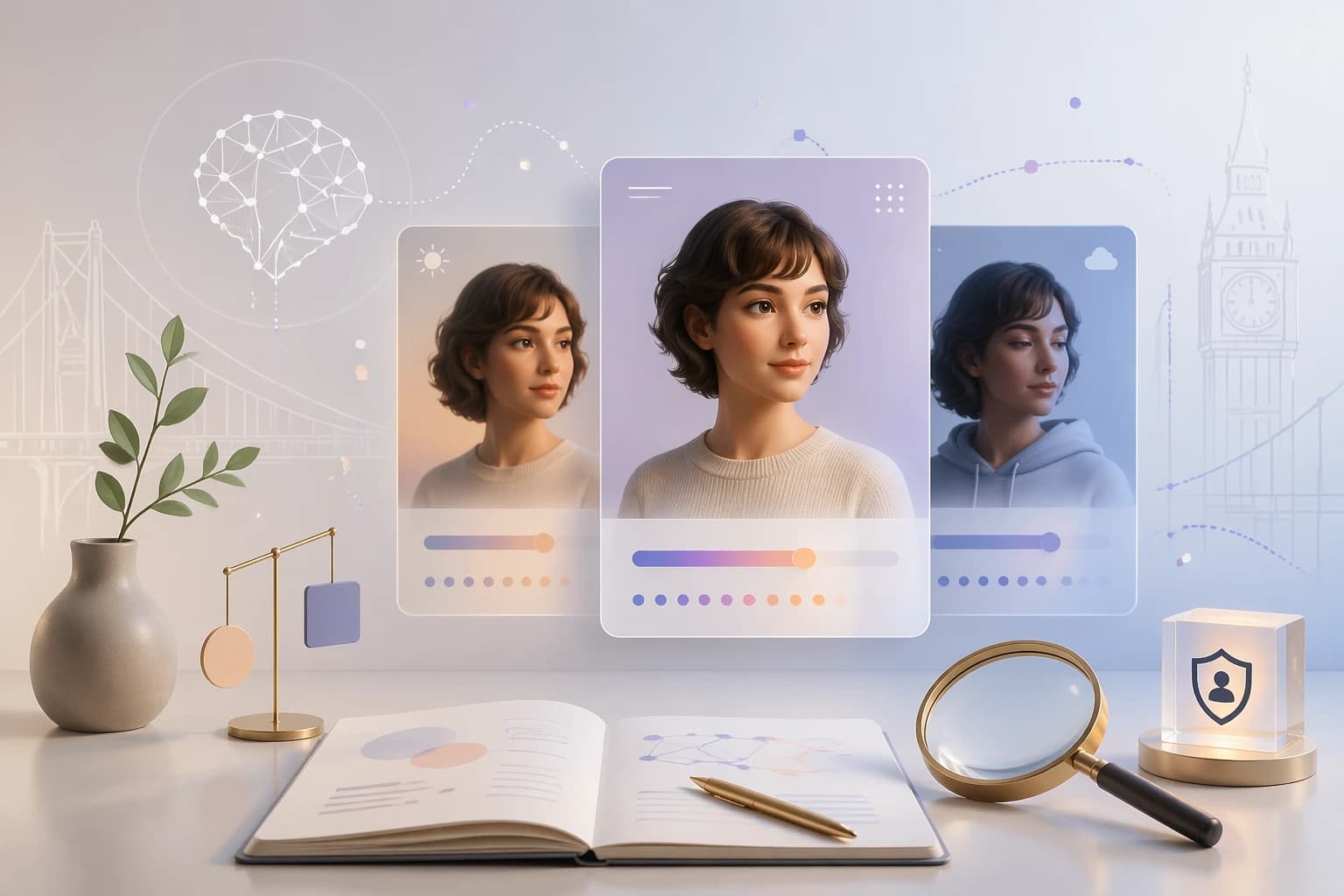
* This content is an entertainment-oriented impression and mood interpretation. It does not determine personality, ability, health, identity, actual age, gender, nationality, or race. The number shown by the AI is a light "age-impression" reference for the photo — not a verdict on a person's real age.
"What age does AI think this photo gives off?" What the AI actually reads is not a real age, but the "age impression" the photo projects. Here's a light look at the visual cues the system uses.
What cues make up an "age impression"?
The model looks at skin texture, how light reflects off the face, pore distribution, and tone evenness. Wrinkle patterns — forehead lines, frown lines, crow's feet, nasolabial folds — are also part of the mood. Facial shape (cheek volume, jawline clarity) further colours the impression.
How consistent is the read?
Published research reports average differences of 3–5 years between AI impressions and real age, but the number is best read as "this is the impression the photo carries" rather than a real-age verdict. The 20–40 range reads most consistently; children and older age groups shift more with lighting and expression. The same person can get very different reads from different photos.
Factors that move the impression
Lighting
Strong direct sunlight or backlighting can exaggerate or hide wrinkles and shift the age impression. A soft indoor light keeps the reading most stable.
Makeup
Foundation that masks skin texture or contouring that changes face shape can pull the impression keywords around. The closer to a natural look, the more consistent the read.
Expression
A broad smile produces eye and mouth crease lines that read a little more mature, while a neutral expression tends to read younger. Neither is "correct" — each expression just gives a different impression.
Skin Condition
Those with well-maintained skin may appear much younger than their actual age, while UV damage or smoking-accelerated skin aging can make one appear older.
FaceOracle's age-impression card
FaceOracle uses Claude AI's vision to read multiple visual cues together, and surfaces the impression with a short explanation instead of a single number. Treat the number as an entertainment reference — it does not determine anyone's real age.