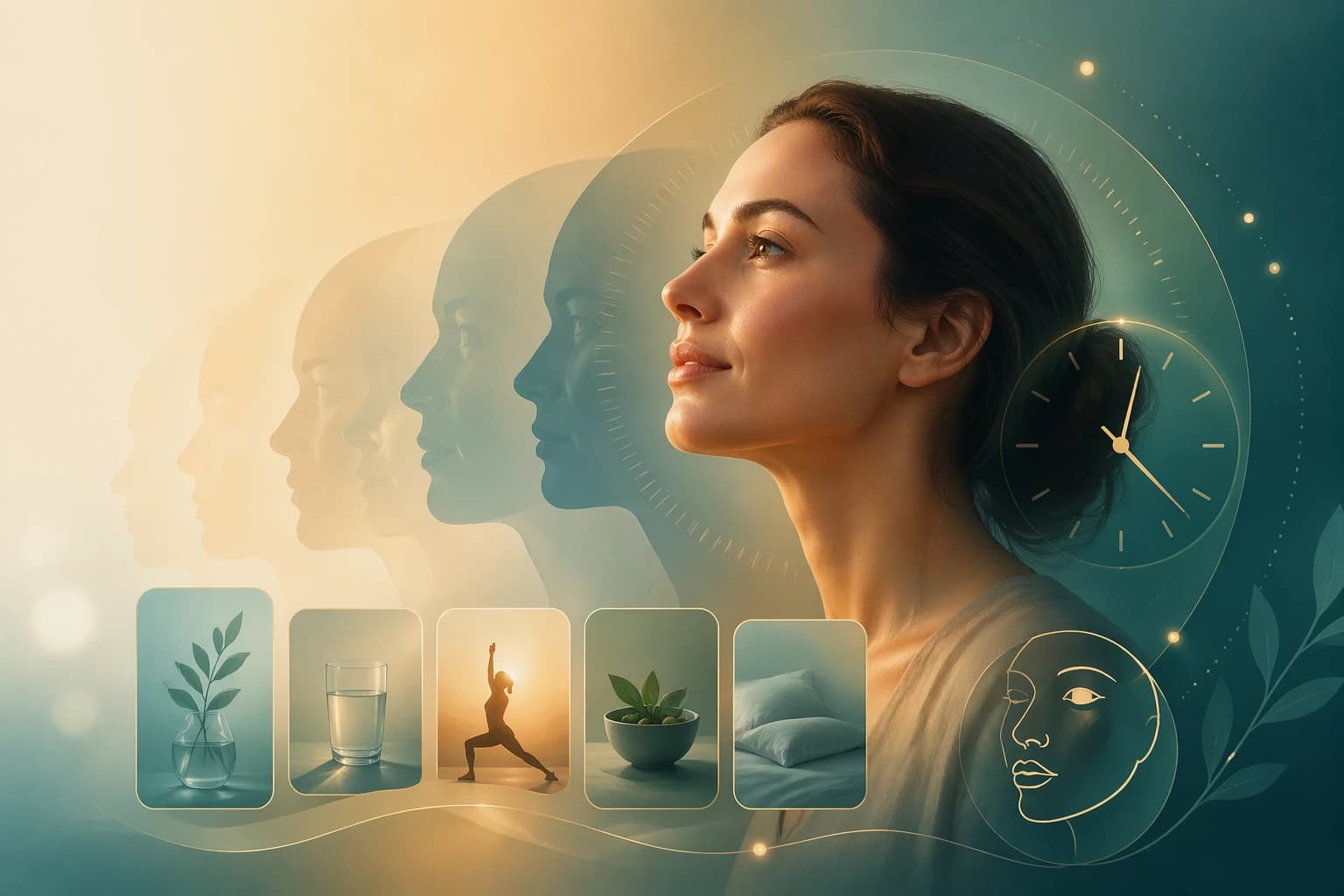
Why Do Some People Look Much Younger Than Their Age?
We all know someone who gets a shocked "Really?!" when they reveal their actual age. This phenomenon, commonly called "looking youthful" (dongahn in Korean), goes beyond just luck — there are often-cited reasons behind it. Today, we'll explore five commonly discussed secrets of people who look younger than their age, drawing on dermatology, popular psychology, and traditional face reading perspectives.
5 Commonly Cited Secrets Behind Youthful Looks
1. Subcutaneous Fat Distribution — Volume Equals Youth
As we age, subcutaneous fat in the face decreases, causing hollow cheeks and under-eye depressions. People who look young tend to maintain abundant subcutaneous fat in the cheek and temple areas. Dermatology sources often note that a thicker fat layer in the mid-face region tends to read as younger. Those round cheeks aren't just cute — they often read as a signal of youth!
2. Bone Structure — The Role of Genetics
Skull shape significantly impacts how young someone looks. A rounded forehead, shorter chin, and higher cheekbones resemble baby face features, creating a youthful impression. These traits are known to trigger "protective instincts" from an evolutionary psychology perspective. Research published in Psychological Science found that adults with baby face features are perceived as younger, more innocent, and more approachable regardless of their actual age.
3. Skin Elasticity and Collagen — The Battle Against Time
Collagen is the key to skin aging. Collagen synthesis decreases by about 1% per year starting in our mid-20s, but those genetically blessed with slower collagen breakdown maintain firmer-looking skin at the same age. A European genetics study has linked MC1R gene variants to how old a face reads. The gene is involved in skin melanin and collagen maintenance, and people with certain variants have been described as reading a little older. Genetics isn't everything, but it clearly plays a role!
4. Expression Habits — Your Expressions Sculpt Your Face
Frequently made expressions gradually become etched as wrinkles over time. People who often frown develop deeper glabellar lines, while those who purse their lips get pronounced nasolabial folds. Conversely, people who smile often may develop crow's feet but maintain an overall bright and youthful impression. In psychology, this is called the "expression residue effect." Traditional face reading also considers faces with bright impressions as attracting positive energy — ultimately, expression habits are a crucial factor in determining facial age.
5. Lifestyle Habits — Sleep, Hydration, and UV Protection
The secrets to youthful looks are hidden in daily habits!
Sleep:Growth hormones are released during deep sleep (slow-wave sleep), regenerating skin cells. A 2010 study from Sweden's Karolinska Institute found that sleep-deprived people were rated as "less healthy, less attractive, and more tired-looking" compared to well-rested participants.
Hydration: Drinking 1.5-2 liters of water daily is crucial for skin moisture. Persistent dehydration reduces skin elasticity and makes fine wrinkles more visible.
UV Protection:80% of skin aging is "photoaging" caused by UV radiation. Consistently applying sunscreen alone can significantly slow skin aging. An Australian study in 2013 showed that the group applying sunscreen daily showed almost no skin aging progression over four years!
Youthful Face Features in Traditional Face Reading
Traditional physiognomy also describes facial features associated with youthfulness: people with wide, rounded foreheads; large, clear eyes; slightly upturned nose tips; and moderately plump cheeks are said to look young even as they age. There's also the interpretation that a wide, bright glabellar area (between the eyebrows) indicates a bright personality and youthful appearance. It's fascinating how science and tradition reach similar conclusions!
How the AI Age-Impression Card Works
The age-impression card reads visual cues that research has linked to how "young" or "mature" a face reads: skin texture, crease patterns, facial volume, and tone evenness. The number surfaced is an impression reference, not a verdict on anyone's actual age. If you're curious about the vibe your photo gives off, try it as a light reference.
※ This content is entertainment that introduces scientific research and traditional face reading in a fun way. It does not replace medical advice — please enjoy it as a reference!