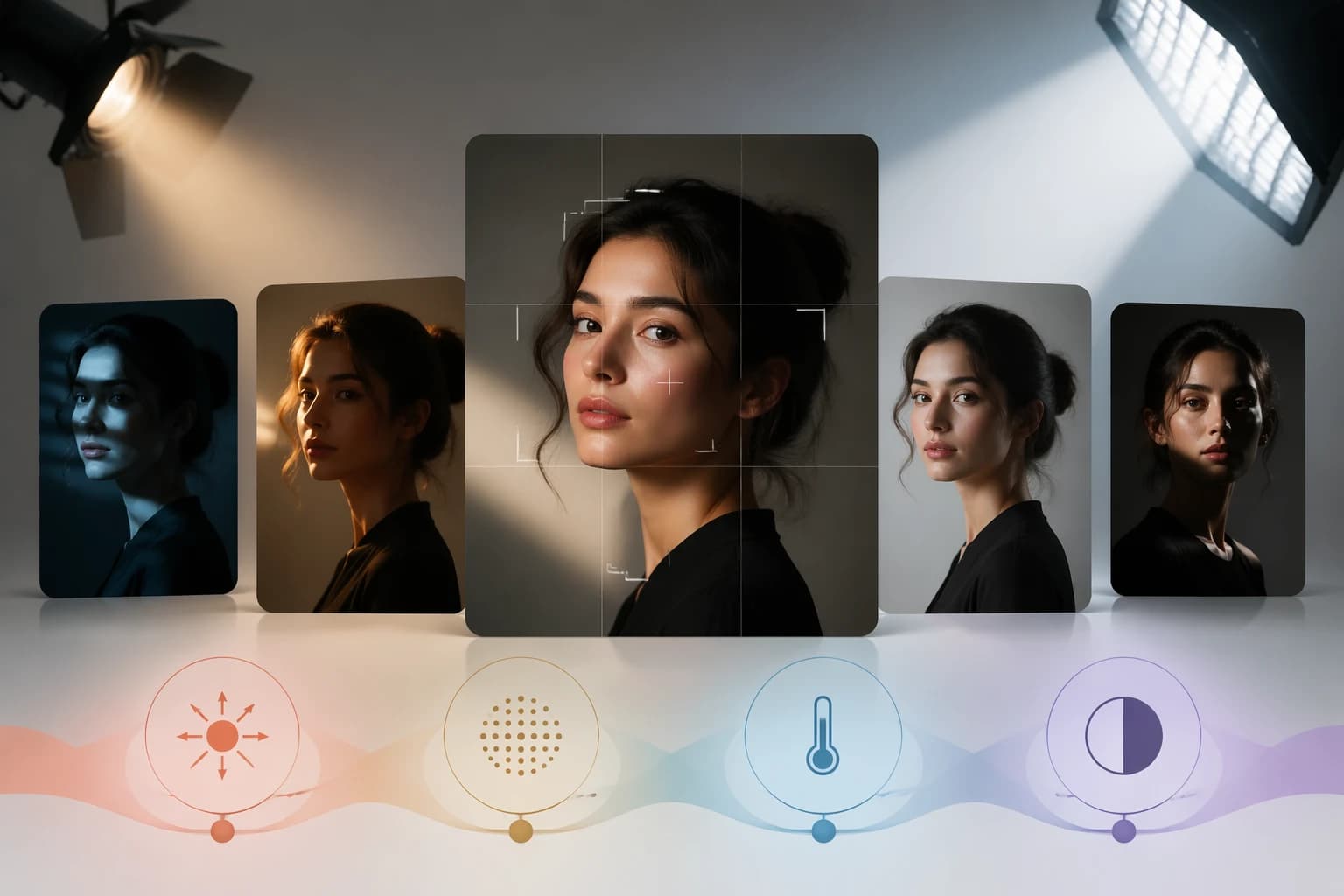
The same face under different light can read like a different person. This is a short, beginner-friendly tour of lighting — no gear talk, just four properties you can use immediately in selfies.
1. Direction — where the light comes from
Direction is the single biggest variable. Straight-on light flattens the face by erasing shadows; it hides fine lines but also hides depth. A 45-degree side light is the classic "flattering" angle — nose and cheekbone volume read nicely — and you can get it for free at any window. Uplight (from below) instantly feels uncanny because we associate it with horror films.
2. Quality — hard vs soft light
A small point source (a bare bulb, a fluorescent tube) produces hard light with sharp shadows. Indirect window light or overcast daylight is soft light; skin texture eases and the overall mood calms down. If you want a flattering selfie with zero gear, an overcast window is nearly unbeatable.
3. Temperature — warm vs cool
Color temperature is how yellow or blue a light reads. Golden-hour sunset (~3200K) gives skin a warm, romantic flush. Midday daylight (~6500K) feels crisp and composed. Fluorescents lean slightly green and can leave skin looking dull. It's why the same person's "morning commute selfie" and "afternoon cafe selfie" can feel worlds apart.
4. Contrast — how dramatic
A big gap between highlights and shadows = dramatic. A small gap = calm. Studio portraits of celebrities often look "chic" because they lean into high contrast on purpose. For everyday selfies, a medium contrast usually reads as friendliest.
Four ready-made selfie recipes
A. Clean, approachable
Stand at a 45-degree angle to a window so light covers the front two thirds of your face. A white wall opposite the window bounces light back and softens the shadow. Great for resumes and profile pics.
B. Warm mood selfie
Window at sunset. Low color temperature warms the skin automatically. Pairs beautifully with warm-tone makeup.
C. Cool, editorial
Overcast outdoor light against a slightly darker background. Contrast picks up, skin tone cools, and monochrome outfits read cleanly.
D. Dramatic portrait
Single lamp on one side of the room, nothing on the other — strong side light like a film still. Keep roughly 60–70% of the face lit or it tips into harsh.
Why AI can read the same face differently under different light
A vibe-reading model like FaceOracle is really describing the pixelsin front of it. The same person photographed under a fluorescent tube might return "cool urban vibe," while a sunset window produces "warm vintage." That isn't the model being wrong — it is evidence of how much light actually carries.
Takeaways
- Direction matters most. A 45-degree window is almost always safe.
- Soft light flatters skin; hard light highlights structure.
- Color temperature sets the whole emotional tone of the photo.
- Comparing your face under different lights teaches you more than any one "best angle."