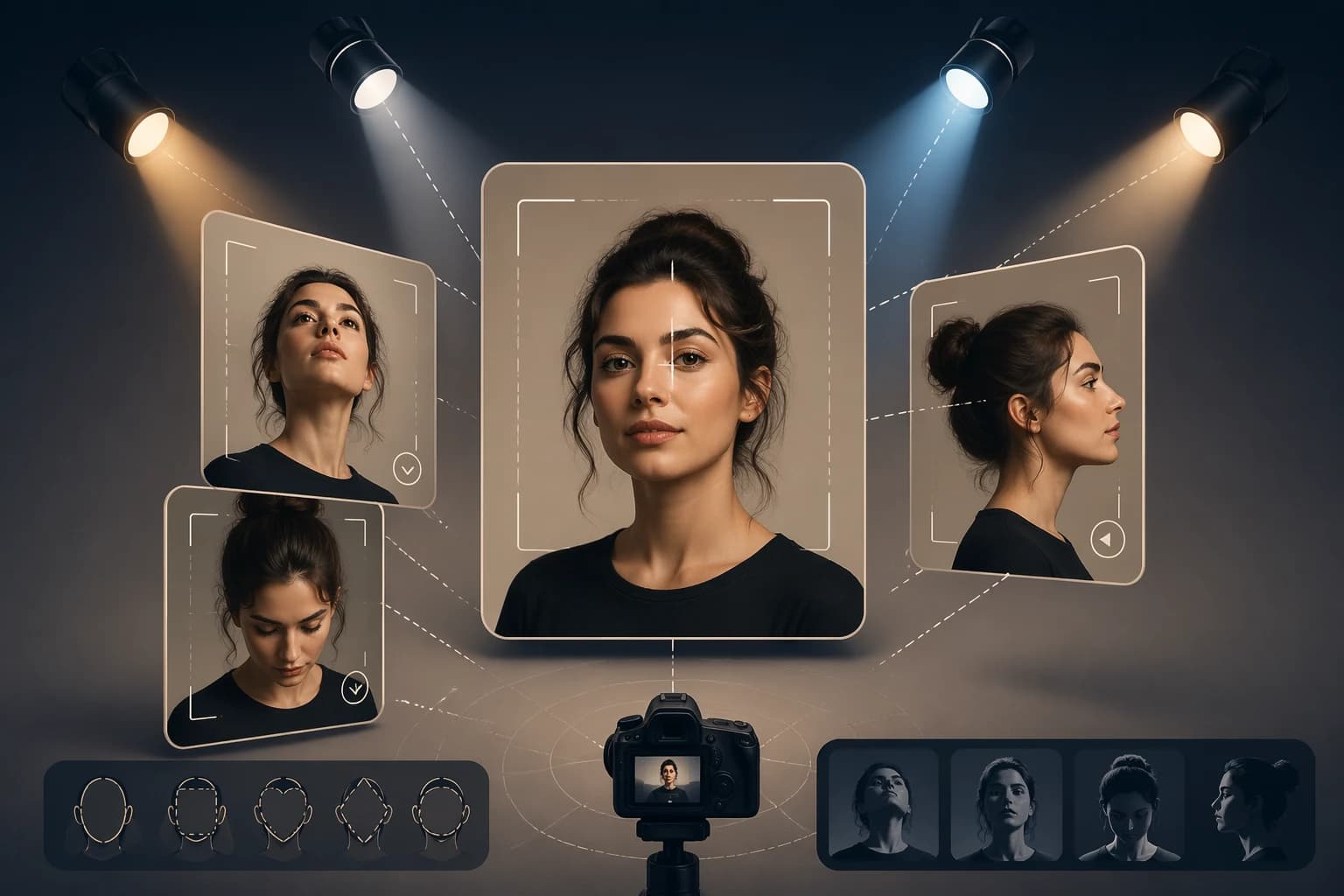
When a director wants a hero to look towering, the camera tilts up. When they want a character to look small, it tilts down. Everyday selfies follow the same principle, and one angle change can reshape a first impression.
The safe default: a touch above eye level
A lens sitting roughly 5–15 degrees above eye level flatters most faces. The shadow under the jaw shortens, the eyes enlarge, and the neck-to-face transition reads cleanly. Looking slightly down into the camera app puts the lens right there.
Eye level — trustworthy
Perfect eye-level gives a "meeting your gaze" feeling, which is why it is the house angle for résumés, corporate profiles, and interviews. The trade-off is a slightly flatter face, so lean on light for dimension.
Low angle — power, but risky
Low angles enlarge the subject and project authority. Cinema reserves them for villains and hero moments. On a phone, low angle emphasizes jaw bottom and nostrils, which tips quickly into "that's a bad photo" territory. Use it only when you want an intentionally strong look.
High angle — cute, small
High angles shrink the subject. Teen K-pop selfies live here. Faces elongate, eyes grow, and the first impression reads young — but too extreme and it reads fragile.
Profile / three-quarter — dramatic
A 3/4 turn or a true profile highlights structure. Modeling portfolios always include one. For a selfie, turn the face about 30% off-axis and leave 70% toward the lens.
Angle hints by face shape
- Round: slight high angle to add length; avoid dead-on flat.
- Square: slight high angle + 45-degree turn; low angle over-emphasizes the jaw.
- Oblong: dead-on eye level balances best.
- Heart: dead-on; a low angle enlarges the forehead.
- Oval: most angles work; pick by mood.
Common mistakes
- Mirror selfies with the phone far below chest height (accidental low angle).
- Tucking the chin too hard, producing a double shadow.
- Going ultra-high angle to "look smaller," ending in unnatural proportions.
Distance and lens matter too
Distance matters as much as angle. Holding a phone too close to your face triggers wide-angle distortion that enlarges the nose and forehead. Extend your arm or use a stick to add a little distance, then zoom in slightly, and the features fall into far more natural proportion. The same angle reads differently with distance alone — so if a photo never looks right, change the distance before the angle.
Angle and AI analysis
When an AI report returns "cool vibe," "strong vibe," or "soft vibe," more than half of that signal is coming from angle and light. Feed the same person's photo shot from a different angle and the result can shift substantially. Treat any single report as a read on today's photo, not a fixed identity.