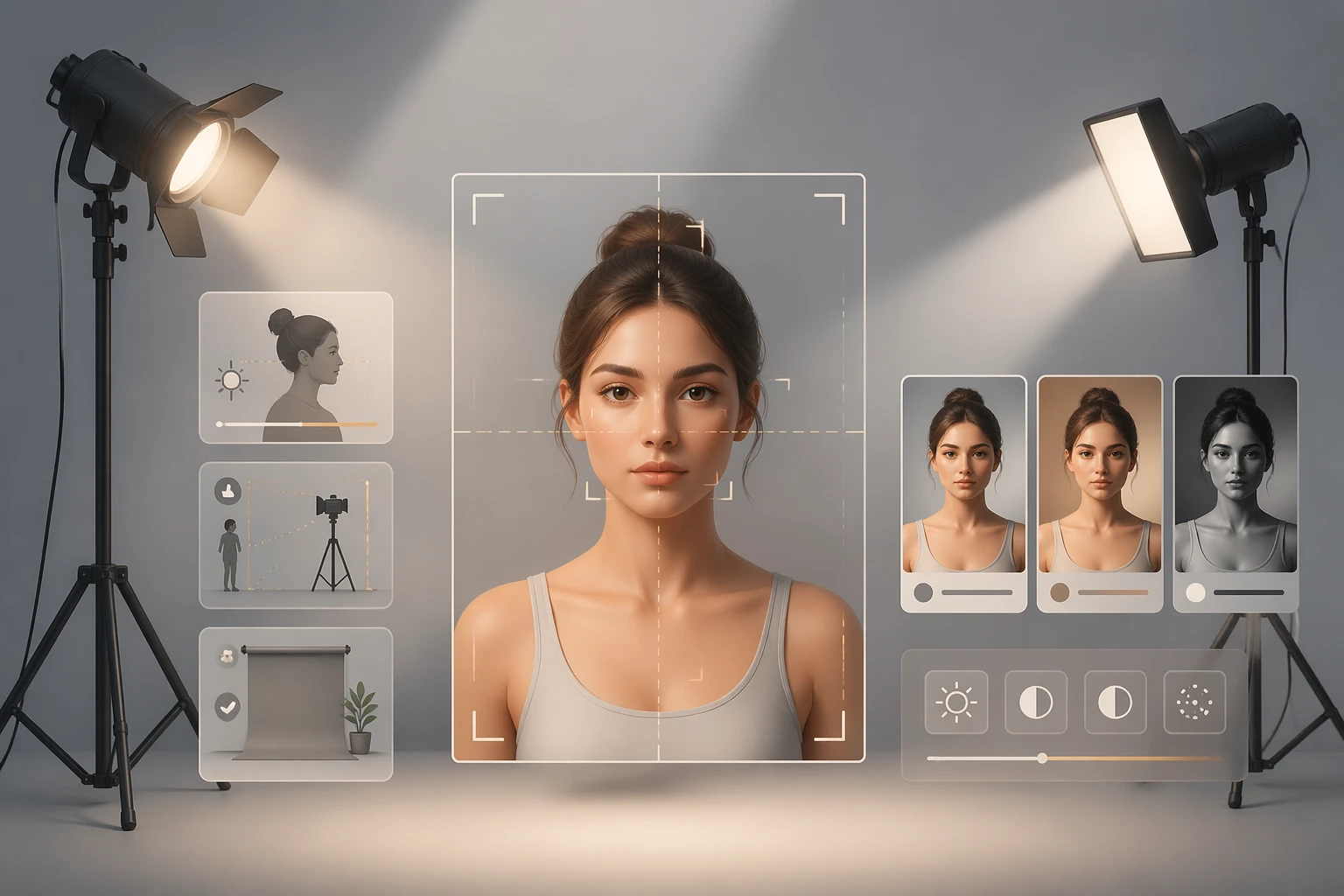
Why ID Photos Feel So Strict
Passport, certificate, and resume ID photos follow rules that are very different from a casual selfie. Most ask you to face forward, keep a neutral expression or only a faint smile, and pose in front of a bright, even, plain background. Heavy shadows are not allowed, hair should stay off the face, and both ears and the jawline usually need to be visible. If you wear glasses, watch for glare and lens shadows that could hide the eyes.
All those rules can feel intimidating, but they actually remove the guesswork. Once you handle a few key points, almost anyone can come out looking steady and clear. This guide walks through how to look rested and natural while still staying inside the rules, from expression all the way to posture.
The Secret to Expression Is Letting Go
Expression is the hardest part for most people. You cannot grin widely, so the face tends to freeze. The trick is to relax rather than force a smile. Right before the shutter, part your lips slightly and then close them gently. This releases tension in the lower lip and jaw so the face looks softer. Easing the muscles between your brows helps too.
If a faint smile is allowed, do not push the corners of your mouth up hard. Aim for a gentle look where the top teeth are barely visible. A truly relaxed smile reaches the eyes a little, so picture a pleasant moment just before the shot to soften your gaze. One quiet exhale before the click drops the extra tension in your shoulders and face for a calmer result.
Wardrobe That Contrasts With the Background
ID backgrounds are usually white or a very light gray or blue. That is why a white or pale beige top can blur the edge between your face, your clothing, and the wall, leaving your outline looking washed out. Choose a color that contrasts gently with the background.
Calm, not overly saturated tones such as navy, charcoal, deep teal, or burgundy frame the face clearly. A clean neckline or a collared top tidies the shoulder line, while heavy shine fabrics, large patterns, and fine stripes that can shimmer on camera are better avoided. Try one or two tops that suit your skin tone at home first, and you will spend less time deciding on the day.
Even Front Lighting Erases Shadows
The difference between a flattering ID photo and an unflattering one usually comes down to light. When light leans to one side or only beats down from above, dark shadows form under the eyes, beside the nose, and below the jaw, which reads as tired or older. The goal is soft, even light coming from the front.
In a studio, the ideal setup is one soft main light in front plus a gentle fill from the sides or below to open up the shadows. If you shoot it yourself, stand facing a window so daylight hits you head on, and soften harsh midday sun with a sheer curtain or thin cloth. If under-eye shadows bother you, rest a light cloth or sheet of paper on your lap to bounce a little light upward. Avoid a single bright ceiling light directly overhead, since it deepens shadows.
Sit Tall and Keep the Chin Level
Posture alone can change the whole impression. Do not sink back into the chair. Sit with a straight back as if you grew a little taller, but deliberately drop your shoulders to release tension. Then imagine the crown of your head lifting toward the ceiling to lengthen the neck, which tidies the neck and jawline.
Lifting the chin too high emphasizes the nostrils, while tucking it too far creates a double chin, so keep it level with the floor. Look straight into the lens, and even if a perfectly square pose feels a bit stiff, an untwisted neck and shoulders suit ID photos best. A quick mirror check of your back, neck, and chin alignment before the shot keeps the result steady.
Small Details That Read as Rested
Sleeping well and drinking enough water the night before reduces puffiness and under-eye shadows so you look fresher. A lighter, less salty dinner the night before also helps keep next-day puffiness down. On the morning of the shoot, cleanse gently and focus on hydration to smooth the skin. Avoid a thick, very matte layer of powder, which can look artificial under lights. A soft natural glow works better.
Sweep hair off the forehead, eyes, and ears so nothing is covered, and tame flyaways in advance. Just before the shot, close your lips lightly, blink once or twice, then look at the lens to bring natural life back to the eyes. If tension freezes your face, glance away briefly and return to the lens for a more relaxed look.
Wrapping Up, This Is a For-Fun Style Reference
The expression, wardrobe, lighting, and posture tips here are not fixed rules. They are a for-fun style reference to help you look calmer and clearer within the requirements. For any photo you submit, always check the size, background, and expression standards of the issuing office first, then adapt these ideas inside them. May the shot you take today feel a little more like you.