Start With the Goal: Trust, Not Glamour
The goal of a business profile photo is not to look glamorous. It is to give a first time viewer a clear and approachable sense of quiet competence. When a recruiter or a colleague sees your photo, the words you want in their mind are tidy, steady, and easy to talk to, not dazzling. So a natural and crisp face works far better than dramatic lighting or a model style pose.
A good first impression works a bit like the halo effect, helping the rest of your profile read more favorably. A blurry or overdone photo does the opposite and creates distance before anyone reads a word. So decide one line before you shoot. I want to look like someone you can trust with the work. That single standard makes every choice about clothing, background, and expression much easier.
Wardrobe: A Mid-Tone Solid Near the Face
The point of your clothing is to not compete with your face for attention. For the top that sits closest to your face, pick a solid mid-tone color that is neither too bright nor too dark. A pure white shirt can push the face into shadow, and pure black can make your shoulder line vanish. Navy, calm gray, soft blue, or muted khaki tend to support your skin tone safely.
Avoid loud patterns, thin stripes, large logos, and shiny fabrics. Thin stripes can shimmer and smear on camera, and a logo can grab the eye before your face does. If you want more color, recall the 60-30-10 rule. Give the largest area a calm base color, then a secondary color, then only a small accent. Press your clothes ahead of time so the shoulders and collar fall clean and straight.
Background: Clean and Slightly Out of Focus
The simpler the background, the better. An even surface like light gray, soft beige, or a calm wall lets your face stand out. A bookshelf, laundry, busy signs, or people walking by scatter attention and make the shot feel cluttered. If you shoot at home, stand a step or two away from the wall so your shadow does not stick to it.
Letting the background fall slightly out of focus makes your face pop. Leave enough space between you and the wall, and when you can, use a window where soft daylight comes in. Gentle light on an overcast day flatters skin more than harsh midday sun. Light that arrives at a slight angle adds depth to the face, so try standing with the window to your side.
Expression: A Light Smile With Engaged Eyes
A calm smile is the answer. Not a wide grin that bares your teeth, but lightly raised corners of the mouth with a faint smile reaching the eyes. If only the mouth smiles while the eyes stay frozen, it looks stiff, so let the warmth soften the area around your eyes too. That is what people often call a Duchenne smile.
Right before the shot, exhale once and drop the tension in your shoulders. Think of the lens as a friend looking back at you and meet it as if greeting them, and your gaze comes alive. Push your chin very slightly forward and down. That lengthens the neckline and reads as quiet confidence. Take several frames in a row and choose the one where you look most at ease.
Framing: Head and Shoulders, Eyes on the Upper Third
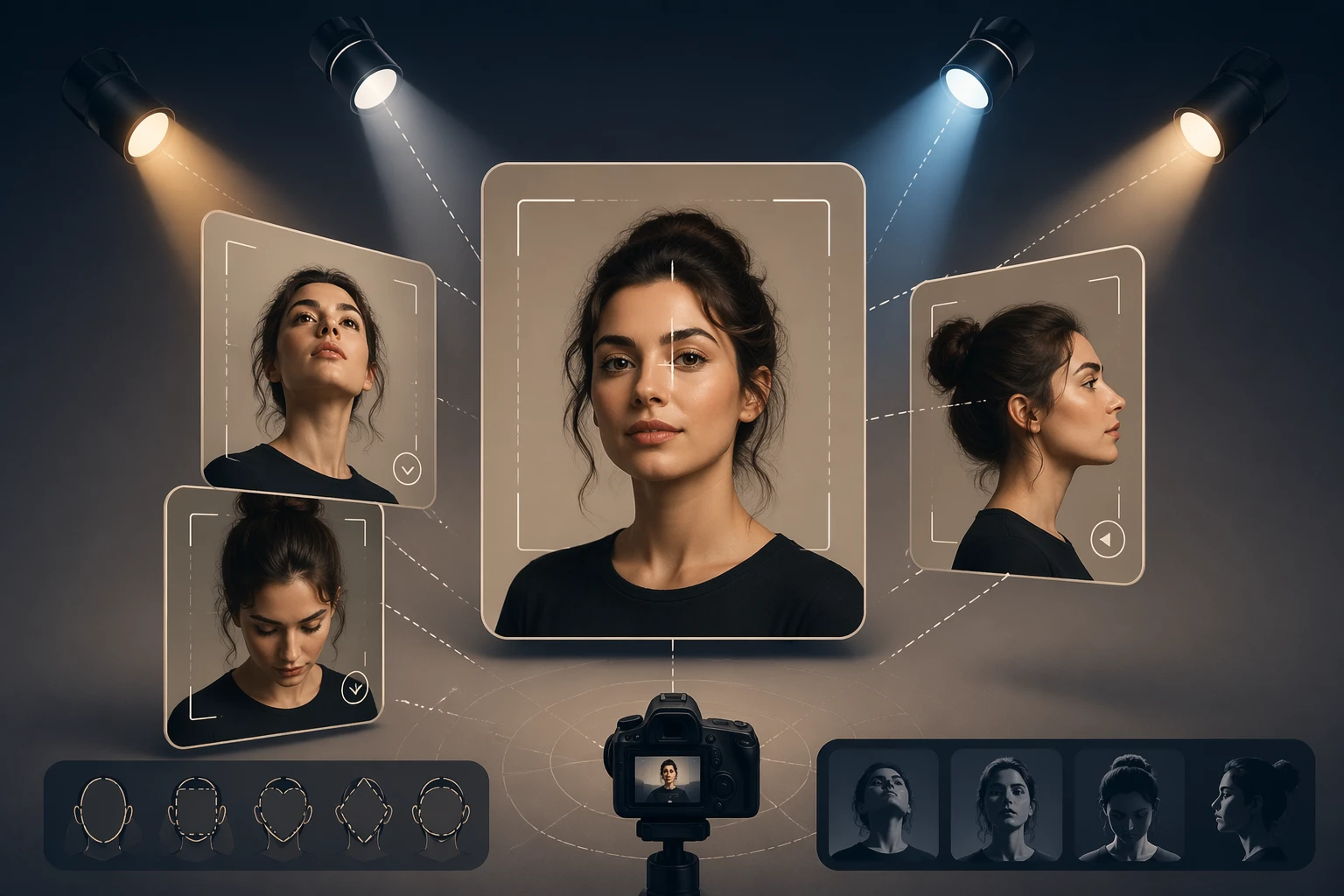
The default framing is head and shoulders. A face packed too large feels cramped, and too far away hides your expression. Leave a little space above the head and include the shoulders naturally for a stable look. Recall the rule of thirds that splits the frame into three by three, and place your eyes near the upper horizontal line so attention rests on your face.
Keep the camera at eye level or just slightly above. Shooting from too low emphasizes the chin, and from too high makes you look shrunken. If you use a phone, set it on a tripod or ask another person to hold it rather than taking a selfie, so the face proportions stay natural at a small distance. Profile photos often crop to a circle, so leave comfortable room around the center.
Grooming, Consistency, and What to Avoid
Keep your hair and clothing neat. A stray hair, a creased collar, or a shiny forehead are easy to fix with a quick mirror check. If you wear glasses, tilt your head a touch so light does not bounce off the lenses. And using the same photo across your resume, LinkedIn, and work chat helps people remember you faster. Consistency is a small signal of trust.
What to avoid is clear too. A selfie shot with harsh flash, a face cropped out of a group photo, and heavy retouching or filters all read as unprofessional. Keep editing to a light touch on blemishes and shine, and do not artificially reshape your face or skin. Resume and ID style leans a little more formal and front facing, while LinkedIn keeps the same standard with a touch more warmth in the smile.
Finally, Keep It Light
All of these tips on wardrobe, background, expression, and framing are a for-fun styling reference. There is no single right answer, so pick and adapt what fits your own mood and your field. Relaxing, taking several frames, and choosing the one you like is already a great start.