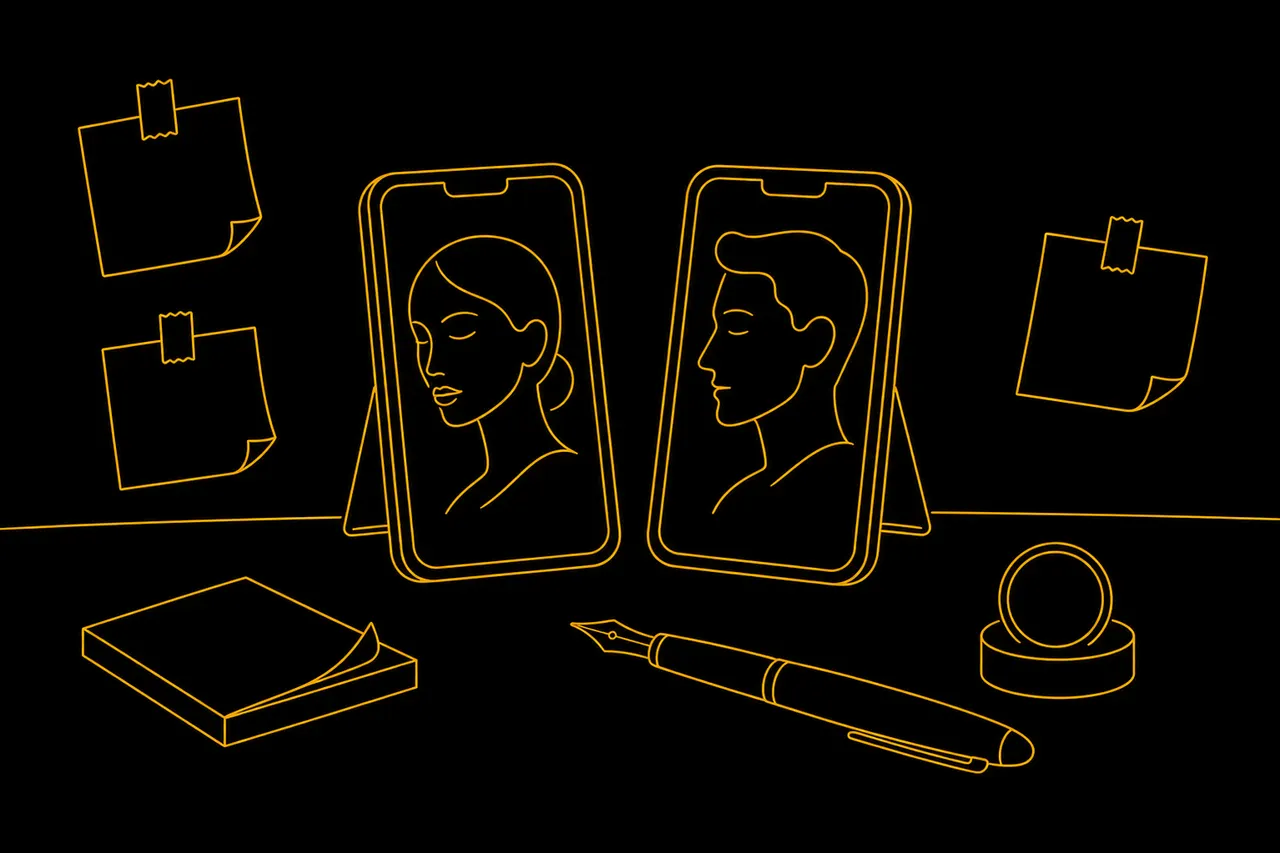
The maintainer ran two of his own photos through FaceOracle
It’s not common for the person who builds FaceOracle to upload their own selfie. Most days the work is editing copy and prompts, not running my own photo. But this month I picked two shots and ran them honestly through the tool. Below is what the result card said, plus what two long-time friends said about the same photos, side by side.
I won’t just paste the result. The interesting part is comparing what the AI got right, what it missed, and how its tone differed from a friend’s tone.
Photo A — 4pm, by a cafe window, straight-on shot
What FaceOracle said. Soft falloff in the light warms the whole tone. A faint highlight on the upper cheek takes weight off the read. Autumn-warm base, camel reads great.
Friend J. Cafe shot, yeah it’s soft, but were you tired that day? The under-eye looks a bit heavy.
Friend H. Honestly this one’s better because you’re bare-faced. Lines up with how you usually look.
Put the three side by side and the AI did get the visual fact right — the upper-cheek highlight. What it can’t do is the context J added (you were tired that day), or the temporal comparison H made (matches how you usually look). A single photo carries neither of those. So the AI report is best taken as a read of this one shot, nothing more.
Photo B — Mirror selfie, new round-frame glasses
What FaceOracle said. Black round frame reinforces the round line of the face, pulling the visual weight toward the center. Calm mood. Grey or charcoal tops would land.
Friend J. They suit you, but the bridge sits a little high. Adjust them.
Friend H. These actually look great on you. You were always wearing metal frames before, right?
Here the AI and the friends diverged. The model called the frame a strength of the photo. J gave practical wear-quality feedback. People are uniquely good at this stuff — the way you keep adjusting the glasses, the way you held them in the mirror. AI sees a static frame; a friend remembers you fidgeting.
So what’s the takeaway?
Treat the AI report like a calm mirror. It reads tone, light, and composition in a single photo and writes it back at you in words. What it can’t do is the context (today, this week), the comparison (vs. how you usually look), or the wear feel of clothes and accessories. That part belongs to the person next to you.
So I do both now. Run the new selfie through FaceOracle for the tone read, then send the same photo to one friend for an honest one-liner. Together they tell me which frame actually looks like me.
More of this column to come
I plan to drop one of these every few weeks — me running my own photos and writing up what worked and what didn’t. The honest version is more useful than a polished pitch. Next one is on outdoor shots and how park light shifts the read.
* This is a first-person column by Yuseong Kim, the FaceOracle maintainer, working from real photos and real comments received. Friend names are anonymised. All AI results here are entertainment content and cannot be used to judge personality, ability, health, or identity.