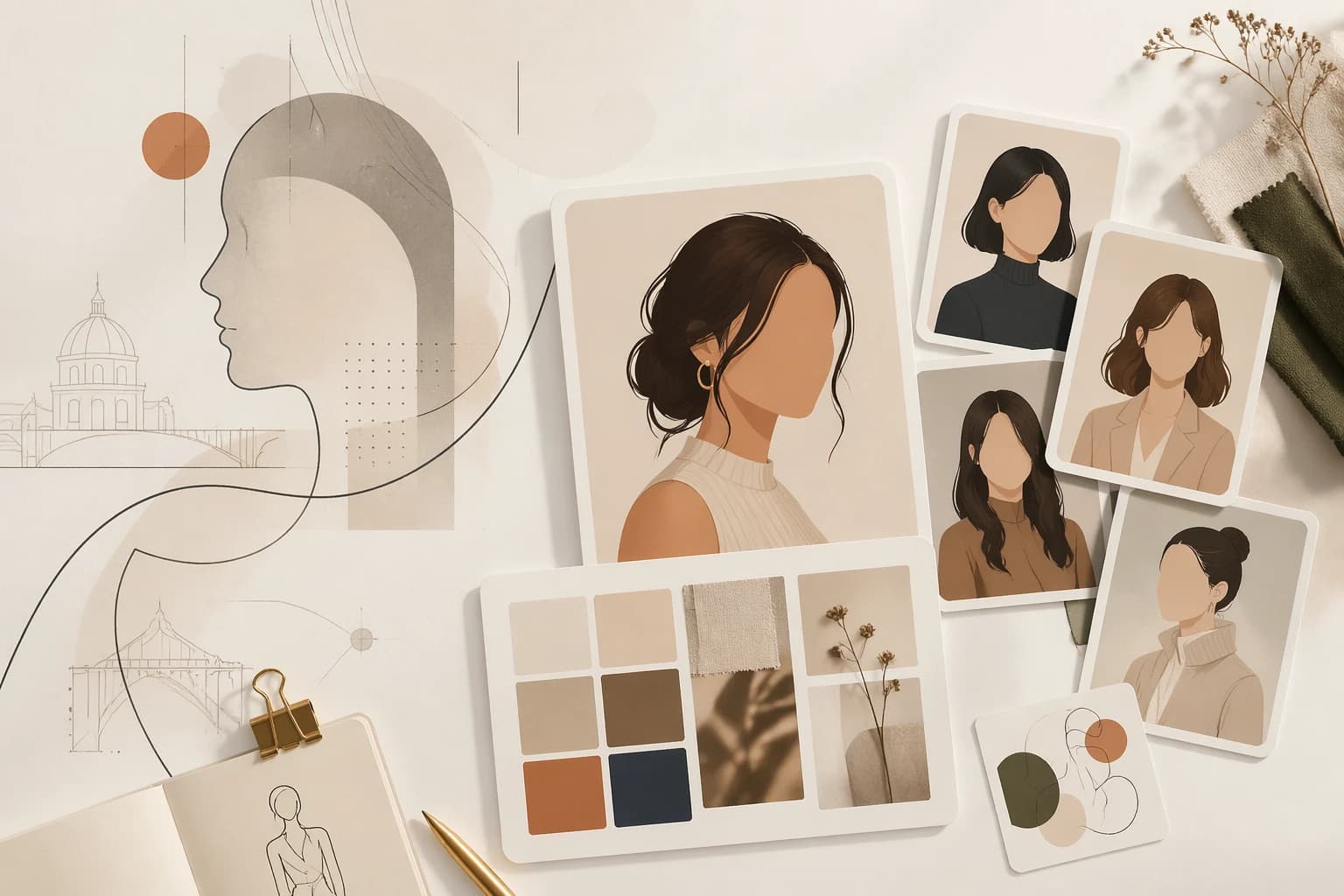
Mood boards are the stylist's oldest tool — a page of images, colors, textures, and fonts that capture a vibe at a glance. This guide walks through building a tiny personal mood board from your own facial impression.
Why bother
"What should I wear today?" often stalls because your style doesn't have a defined axis. A mood board freezes that axis. Ask "does this fit my board?" while shopping and regret purchases drop.
Step 1 — three impression keywords
Lay out a few of your own photos and pick three words only. Common combos:
- soft / warm / romantic
- crisp / cool / chic
- androgynous / refined / minimal
- cute / lively / colorful
FaceOracle's "first impression keywords" card can seed this. So can asking a trusted friend.
Step 2 — six colors
Lock a palette of six colors. More gets blurry. Lean on your personal-color season but allow one or two "outside" colors you love — that's where personality lives.
Step 3 — four texture images
Fur, silk, knit, leather, linen, metal — texture matters more than beginners expect. Four well-chosen texture images ground the board. The same color in different texture reads completely differently.
Step 4 — three reference figures
Celebrities, fictional characters, or friends. Cap at three so the signal stays clear. You're borrowing their approach, not their face. Noticing what brands they wear hints at where to shop.
Step 5 — map the real closet
Open the closet and sort into "fits the board / doesn't." If a piece you wear often doesn't fit, ask why — then tweak the board. A board disconnected from reality is useless.
Refresh twice a year
A perfect board is less valuable than a board you revisit. Two updates a year (early spring, early fall) is plenty.
Why mood boards fall apart
A board that never gets used usually fails for three reasons. First, too many keywords blur the axis — cut down to three. Second, collecting only "pretty pictures" that have nothing to do with your real closet or lifestyle; a wall of runway gowns is useless if you mostly commute. Third, building it once and never looking again — a board is a living reference you revisit and trim, not a trophy. Avoid those three and the board actually changes how you shop and dress.
Tools
- Pinterest boards.
- Notion pages with image blocks.
- Figma, Canva, or Miro canvases.
- Print and glue — still excellent.
Weaving in a FaceOracle result
The report's "strength keywords," "personal color palette," and "hair suggestions" plug directly into a board. Saving the result card to the corner of your board makes the AI's language visually concrete.